

There is a particular kind of exhaustion that belongs to parents. It is not just physical tiredness, though there is plenty of that. It is the cumulative weight of running a household, managing schedules, showing up for children's needs, holding down work, and somehow maintaining a relationship and a sense of self along the way. In the middle of all of that, the question of what you yourself are eating tends to land somewhere near the bottom of the priority list, right below folding the laundry that has been sitting in the dryer for three days.
The result is a nutritional pattern that most parents recognize immediately when someone names it: eating the leftovers off the children's plates, skipping breakfast because there was not time, grabbing whatever was fastest at lunch, and sitting down for the first real meal of the day at 8pm while still answering emails. It is functional. It keeps you going. But it is not the same thing as nourishing yourself, and the gap between those two things accumulates over months and years into a level of micronutrient depletion that has real consequences for energy, mood, immunity, and the very capacity to keep showing up.
This blog is about that gap and about why a daily greens powder is one of the most practical tools available for closing it, not because it fixes everything, but because it takes 30 seconds and works.
The answer is not laziness or indifference. Research on caregiver nutrition has documented consistently that caregiving roles shift the nutritional focus outward: toward the people being cared for and away from the self. Parents who are focused on ensuring their children eat enough vegetables, enough protein, enough of the right things, often apply an entirely different and much lower standard to their own plates. The child's lunchbox gets planned carefully. The parent's lunch is an afterthought assembled in two minutes before the next thing demands attention.
This pattern is reinforced by the structure of parenting itself. Children eat at relatively regular times. Parents eat when they can. Children are reminded to drink water. Parents forget. Children's nutritional needs are visible and salient. Parents' nutritional needs are invisible to everyone, including themselves, until the deficit has grown large enough to manifest as something hard to ignore: persistent fatigue, recurrent illness, depleted mood, or a nagging sense that something is slightly off but not obviously wrong enough to address.
The gaps that tend to accumulate in parents' diets follow a predictable pattern. They are the nutrients that require either sustained dietary effort to obtain or deliberate supplement habits to maintain, and both of those things require time and mental bandwidth that parenting competes with.
Iron is one of the most commonly depleted nutrients in parents, particularly mothers during and after their reproductive years. Iron requires either regular consumption of red meat or very deliberate plant-source iron pairing with Vitamin C. When meal planning collapses into reactive eating, iron intake often falls significantly below optimal levels. The consequence is a particular kind of tiredness that sleep does not fully fix, because the cellular energy deficit caused by impaired oxygen transport runs deeper than simple sleep deprivation.
Magnesium is similarly prone to depletion under the chronic stress of parenting. The same mechanisms documented in research on psychological stress and micronutrient status apply directly to the sustained low-level stress of caregiving: cortisol increases renal magnesium excretion, and when daily intake is insufficient to compensate, the deficit accumulates. Low magnesium worsens sleep quality, increases anxiety, impairs muscle recovery, and reduces the stress resilience that parents rely on every single day.
B vitamins, particularly B6, B12, and folate, are required for the methylation cycle that governs neurotransmitter production, energy metabolism, and cellular repair. Under the dietary pattern common in busy parents, which often involves heavy consumption of processed or convenience foods and insufficient intake of leafy greens and whole plant foods, B vitamin status tends to decline. The subjective experience of this is the familiar feeling of running on empty without quite knowing why, doing the right things (sleeping when possible, exercising occasionally, eating most meals) and still feeling depleted.
Vitamin C is consumed faster under chronic stress and is easily deficient when fresh fruit and vegetable intake is irregular. Its consequences include impaired immune function at precisely the time when parents are most exposed to childhood illnesses circulating through schools and childcare, and impaired adrenal function that affects cortisol regulation and the body's own stress management capacity.
The standard nutritional advice for improving diet quality as a busy adult reads like it was written for someone who has never met a small child. Cook in batches on Sundays. Meal prep five lunches at the start of each week. Make yourself a nutritious breakfast before work. Drink more water throughout the day. Keep healthy snacks visible and accessible.
These are all genuinely good ideas that apply beautifully to childless adults with predictable weeks and reliable morning windows. They apply far less well to a household where the Sunday batch cooking window is occupied by birthday parties, sports activities, and children who need to be in three places simultaneously. Or where the morning window disappears when someone is sick, or the car does not start, or the school uniform that was definitely clean turns out not to be.
The practical reality of parenting is that nutrition interventions requiring sustained planning, preparation time, and predictable routines face a much higher dropout rate than interventions that can be executed reliably in unpredictable conditions. A daily greens powder works for parents not because it is the nutritional ideal, but because it survives contact with the actual conditions of parenting. It takes 30 seconds. It requires no planning. It happens before the chaos begins. And it delivers a concentrated hit of the specific nutrients most likely to be depleted by the conditions of parenting life.
Spirulina addresses several of the most common parental nutritional gaps simultaneously. Its plant-based iron supports the oxygen delivery that underlies energy and stamina. Its B vitamins support the methylation and neurotransmitter synthesis that underlie mood, focus, and cognitive function. Its complete protein contributes to the muscle maintenance that parents who do not have time for regular strength training need to preserve. And its phycocyanin provides anti-inflammatory support that counters the inflammatory burden of chronic low-grade stress.
Acerola Extract delivers Vitamin C in its most bioavailable food-matrix form. For parents whose fresh fruit and vegetable intake is inconsistent, daily Acerola Extract provides the adrenal and immune Vitamin C support that protects both physical resilience and stress regulation. It is particularly relevant during the endless parade of childhood illnesses that circulate through schools and childcare centers, giving parents repeated immune challenges that a depleted Vitamin C status makes significantly harder to handle.
Barley Grass Powder and Wheatgrass Powder address the magnesium depletion driven by chronic parenting stress. Food-matrix magnesium from the chlorophyll in these grass powders supports the nerve regulation, sleep quality, and cortisol modulation that are simultaneously strained by the demands of caregiving. Consistent daily magnesium support through a greens drink is one of the most practical stress-management tools available, even if it does not feel like one.
Siberian Ginseng and Astragalus Root provide adaptogenic support that is directly relevant to the sustained, low-level, chronic stress profile of parenting. Adaptogens work gradually and cumulatively, building the body's capacity to handle stress without being overwhelmed by it. Over weeks of consistent daily use, the adaptogenic support from a greens formula contributes to the kind of quiet resilience that allows parents to keep showing up without burning out.
Inulin and Apple Pectin support the gut microbiome that parenting stress and inconsistent eating frequently disrupts. A well-functioning gut microbiome improves mood through the gut-brain axis, supports immune function at the first line of defense, and improves the absorption of the other nutrients in the formula. The prebiotic fiber contribution from a greens drink is one of the most neglected but most impactful parts of what makes it valuable for parents specifically.
The greens drink needs to happen before the children are up or immediately when you enter the kitchen each morning. Not after breakfast. Not at lunch when you might get a moment. Before the first demand of the day reaches you. Physically, this means keeping the greens powder on the kitchen counter where you cannot miss it, with a glass or shaker bottle right beside it. The scoop goes in. The water goes in. You stir or shake for 10 seconds. You drink it in the 30 seconds before you start breakfast for the family.
This is the only intervention window that reliably survives the conditions of parenting because it occurs before the day's unpredictability has fully activated. Once the household is awake and the schedule is running, finding a 30-second nutrition window becomes actively difficult. Before the household is awake, it is the easiest thing in the world.
The other reliable option for parents is the smoothie method: blend the greens powder with frozen fruit, milk, and whatever else goes in, make it in the 90 seconds before the school run, and drink it in the car or standing over the kitchen counter. The smoothie approach works well for parents who already make morning smoothies, and the greens powder adds nutritional depth to a breakfast the parent was going to make anyway.
The changes from consistent daily greens use are rarely dramatic and sudden. They are more like the slow improvement you get when a chronic nutritional deficit is gradually corrected: the persistent tiredness that did not have an obvious cause begins to lift slightly. The immune responses to the children's illnesses become slightly less punishing. The afternoon cognitive fog that was being attributed to the age or life stage becomes less reliable. Sleep feels slightly more restorative. The capacity to handle the ordinary frustrations of parenting without losing perspective improves imperceptibly but measurably.
None of these changes are the result of any single ingredient or any single day's dose. They are the accumulated effect of consistent daily micronutrient support over weeks and months, addressing deficits that had accumulated over the same timeframe. The baseline shifts quietly, without fanfare, in the direction of someone who is genuinely nourishing themselves alongside everyone else they care for.
The impact of caregiving demands on nutritional status and the importance of addressing micronutrient gaps in parents and caregivers is supported by emerging research.
Parents give. That is the fundamental reality of the role. The nutritional consequence of sustained giving without equivalent self-nourishment is a slow, quiet, entirely predictable depletion that most parents attribute to the unavoidable demands of the stage rather than to a nutritional gap that can actually be addressed. It can be addressed. The solution does not require a complete dietary overhaul, additional meal planning, or finding time that does not exist. It requires 30 seconds before the household wakes up.
One scoop. Cold water. Stir. Done. The iron, the B vitamins, the magnesium, the Vitamin C, the adaptogens, the prebiotic fiber. All of it, every morning, before the day begins. It will not fix the schedule, manage the school run, or give you back the sleep the children took. But it will quietly, consistently, over weeks and months, restore the nutritional foundation on which every other form of resilience rests. You cannot pour from an empty vessel. A daily greens habit is the fastest and simplest way to keep yours from running dry.
Blending greens powder into smoothies, pancake batter, or yogurt with fruit can be effective for sneaking extra nutrition into children's food. However, make sure to take your own separate full dose first rather than sharing yours with the children. Children have different nutritional requirements and dosing than adults, and the serving is calibrated for adult intake. Your greens habit is for you specifically. Seek your child's pediatrician's advice before regularly including greens powder in children's food.
Missing occasional days will not undo the cumulative benefit of consistent daily use. The most important thing is not a perfect record but a very consistent one. If you miss a morning, resume the next morning without adjustment. Do not double-dose. Do not try to compensate. Simply continue. A habit that survives the occasional bad morning by defaulting to continuation rather than self-criticism is a habit that lasts years, and that longevity is where the real benefit lives.
Greens powders use food-sourced ingredients that are generally well-tolerated, but breastfeeding is a specific physiological state in which any nutritional supplement warrants medical consultation before regular use. Speak with your healthcare provider or a registered dietitian about whether a greens powder is appropriate for your specific situation during breastfeeding, particularly regarding any adaptogens in the formula.
A greens powder differs from a multivitamin primarily in that it delivers nutrients in food-matrix form from whole plant sources rather than as isolated synthetic compounds, which may support better bioavailability for certain nutrients. It also provides plant compounds including polyphenols, adaptogens, and prebiotic fiber that multivitamins do not contain. For parents specifically, the adaptogenic support for stress resilience and the prebiotic gut support are particularly valuable additions beyond what a standard multivitamin provides.
The energy improvement from consistent greens use is real but operates differently from caffeine or stimulants. It is not immediate or acute. It is the gradual correction of the micronutrient deficits that were creating the baseline energy deficit in the first place. As iron supports better oxygen delivery, magnesium supports better cellular energy production, and B vitamins support better metabolic efficiency, the baseline from which you operate shifts upward. This takes weeks, not hours. But for parents whose energy has been quietly declining due to nutritional depletion, it is a real and meaningful change.
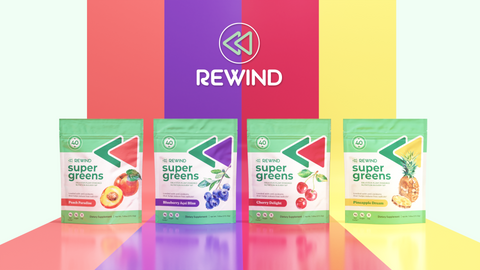

Cherry Delight
$39.99

Pineapple Dream
$39.99

Blueberry Acai Bliss
$39.99


