

Antioxidants are one of the most used and least understood words in wellness. They appear on packaging for everything from green tea to face cream, usually accompanied by vague promises about protection and health. If you drink a greens powder every morning, you have almost certainly been told it is rich in antioxidants. But if someone asked you to explain exactly what that means for your body, what would you say?
This blog gives you that explanation. Not the marketing version, but the actual biological story: what free radicals are, where they come from, what oxidative stress really means, how antioxidants from plant foods counter it, and which specific compounds in a daily greens powder do that work and why. Understanding the mechanism behind antioxidants changes how you think about your daily greens drink. It stops being a vague health gesture and becomes something specific and grounded in biology.
Every cell in your body runs on energy produced through chemical reactions in the mitochondria. These reactions involve oxygen, and as a natural byproduct of normal cellular metabolism, they generate highly reactive molecules called reactive oxygen species, or ROS. The most common include the superoxide anion, the hydroxyl radical, and hydrogen peroxide. These are collectively what most people mean when they talk about free radicals.
What makes free radicals chemically reactive is their electronic structure. They contain one or more unpaired electrons in their outer shell, and unpaired electrons are inherently unstable. To stabilize themselves, free radicals aggressively seek out electrons from nearby molecules. They steal electrons from cell membranes, proteins, and DNA in a process called oxidation. When this electron theft happens to a biological molecule, that molecule is damaged. The damaged molecule may no longer function correctly, and in some cases it becomes a free radical itself, propagating the damage in a chain reaction.
In small amounts and for short periods, ROS are not only normal but necessary. They serve as signaling molecules in the immune response, help kill pathogens, and participate in cellular communication. The problem is chronic, low-level overproduction of ROS beyond what the body's antioxidant systems can neutralize. This state of imbalance, where free radical production persistently exceeds antioxidant defense, is called oxidative stress.
Oxidative stress has both internal and external drivers. Internal sources include the normal byproducts of cellular energy production, the inflammatory responses of the immune system, and the metabolic processing of food. External drivers include ultraviolet radiation from sun exposure, air pollution and particulate matter, cigarette smoke, alcohol metabolism, and the oxidized fats in highly processed food.
The critical point is that oxidative stress is not a problem confined to heavy smokers or people living in heavily polluted cities. It accumulates continuously in everyone, from the normal burn of cellular metabolism, from exercise, from imperfect diet, from stress hormones, and from the environmental exposures of ordinary modern life. The question is not whether your body is producing free radicals, but whether your antioxidant defenses are keeping pace with the production rate. This is where daily plant nutrition becomes not just health advice but practical biology.
An antioxidant is any molecule capable of safely donating an electron to a free radical without itself becoming dangerously reactive. By providing the electron the free radical was seeking, the antioxidant neutralizes it before it can steal one from a cell membrane or DNA strand. The antioxidant molecule becomes a stable, non-damaging radical, or is converted back to its active form by other antioxidants in a network of protective chemistry.
The human body runs two main categories of antioxidant defense. Endogenous antioxidants are produced by the body itself: enzymes like superoxide dismutase, catalase, and glutathione peroxidase, along with the molecule glutathione, which is sometimes called the master antioxidant because of the central role it plays in recycling other antioxidants and protecting cells from oxidative damage. Exogenous antioxidants come from the diet: Vitamin C, Vitamin E, and the vast category of plant polyphenols that includes quercetin, resveratrol, catechins, anthocyanins, and many more.
These two systems work together. Vitamin C recycles oxidized Vitamin E, restoring its antioxidant activity. Plant polyphenols stimulate the production of endogenous antioxidant enzymes by activating a regulatory protein called Nrf2, which controls the expression of genes encoding antioxidant and detoxification enzymes. The dietary polyphenols in a greens powder do not just neutralize free radicals directly. They also upregulate the body's own antioxidant machinery, amplifying the protective effect beyond what any single compound could achieve alone.
Spirulina contains one of the most potent and distinctive plant antioxidants in any food source: phycocyanin, the blue pigment that gives Spirulina its color. Phycocyanin is a powerful scavenger of hydroxyl and peroxyl radicals, two of the most damaging free radical types. Research has documented phycocyanin's ability to inhibit lipid peroxidation, the chain reaction by which free radicals damage cell membranes, and to suppress the inflammatory enzyme cyclooxygenase-2, adding anti-inflammatory action on top of direct antioxidant protection.
Beyond phycocyanin, Spirulina provides beta-carotene, a carotenoid antioxidant that protects cells from oxidative damage and serves as a precursor for Vitamin A. It also provides superoxide dismutase activity, supporting the endogenous antioxidant enzyme system directly.
Quercetin is a flavonoid found throughout the plant kingdom, and in terms of antioxidant potency it is among the most powerful dietary polyphenols identified. Its molecular structure, specifically the arrangement of hydroxyl groups on its aromatic rings, gives it exceptional electron-donating capacity. Quercetin simultaneously scavenges multiple free radical types, chelates pro-oxidant metal ions like iron and copper that can catalyze free radical formation, and inhibits the enzymes that produce ROS in the first place.
Resveratrol operates through a different but complementary mechanism. Its primary antioxidant pathway involves activation of SIRT1, the longevity-associated enzyme that promotes cellular repair and upregulates the expression of endogenous antioxidant defense genes. Resveratrol also directly scavenges free radicals and has demonstrated the ability to reduce LDL oxidation, the process by which low-density lipoprotein particles become pro-inflammatory and damaging to arterial walls. Together, Quercetin and Resveratrol address oxidative stress through direct scavenging, enzyme induction, and upstream prevention of ROS generation.
Green Tea Extract is standardized for its epigallocatechin gallate content, commonly called EGCG. EGCG is one of the most studied plant antioxidants in the world, with a research record spanning decades and thousands of publications. It is a polyhydroxy catechin whose multiple hydroxyl groups give it exceptional free radical scavenging capacity. EGCG also activates the Nrf2 pathway, stimulating the production of glutathione and the endogenous antioxidant enzymes that provide sustained cellular protection beyond the window of EGCG's own direct activity.
The EGCG in Green Tea Extract synergizes with Vitamin C from Acerola Extract in the greens formula. Vitamin C helps maintain EGCG in its active, reduced form, extending its antioxidant activity and improving its bioavailability at the cellular level. This synergy between plant polyphenols and vitamins is a recurring feature of how antioxidants work in food-matrix form, and it is one of the primary reasons that whole-food sources of antioxidants consistently outperform isolated antioxidant supplements in clinical research.
Blueberry Powder and Bilberry Fruit Extract both provide anthocyanins, the pigments that give blue and purple fruits their color and some of the most potent antioxidant activity found in any dietary source. Anthocyanins have demonstrated the ability to cross the blood-brain barrier, providing antioxidant and anti-inflammatory protection in the central nervous system where few dietary compounds can reach. They protect neurons from oxidative damage, support vascular health by reducing the oxidation of blood lipids, and upregulate the endogenous antioxidant enzyme system in a similar fashion to Nrf2-activating polyphenols.
Grapeseed Extract is concentrated in oligomeric proanthocyanidins, commonly called OPCs. These compounds are remarkable for their antioxidant potency, with ORAC values measured at many times those of most other plant polyphenols. OPCs are particularly effective at protecting collagen and elastin from oxidative damage, supporting the structural integrity of connective tissues, blood vessels, and skin. They also have exceptional bioavailability compared to many other polyphenols, crossing intestinal membranes efficiently and distributing to tissues throughout the body.
Research consistently demonstrates that the combination of diverse plant antioxidants produces effects that exceed what any single compound achieves at the same dose. This synergistic property of plant polyphenol mixtures has several explanations.
First, different antioxidants are active in different chemical environments. Vitamin C is water-soluble and works primarily in the aqueous compartments of cells and blood. Vitamin E and certain polyphenols are fat-soluble and protect the lipid-rich cell membranes where free radical chain reactions in fat molecules are particularly damaging. Anthocyanins cross the blood-brain barrier where other compounds cannot reach. A diverse antioxidant profile covers the full range of cellular locations and chemical environments where oxidative damage occurs.
Second, antioxidants protect and recycle each other. Vitamin C regenerates oxidized Vitamin E. Glutathione recycles Vitamin C. EGCG and quercetin maintain each other's reduced, active forms in a network of mutual protection. Without this network, any single antioxidant is consumed faster and protects less efficiently.
Third, different polyphenols activate different components of the Nrf2 pathway, producing a more comprehensive upregulation of endogenous antioxidant defense than any single compound can achieve. The daily greens powder, with its Spirulina phycocyanin, quercetin, resveratrol, EGCG, anthocyanins, OPCs, and Acerola Vitamin C, delivers the kind of broad-spectrum antioxidant network that isolated supplements fundamentally cannot replicate.
Surveys of dietary intake in Western populations consistently find that the majority of adults consume substantially less than the amounts of dietary antioxidants associated with measurable health protection in epidemiological research. The gap between the 80 grams of fruits and vegetables most adults eat and the 400 to 800 grams associated with optimal antioxidant protection in research populations is enormous. This gap translates directly to a chronically insufficient exogenous antioxidant supply relative to the body's daily free radical production.
The practical consequence is not dramatic and sudden. It is the slow accumulation of oxidative damage at the cellular level: mildly impaired mitochondrial function, modest DNA damage that repair systems struggle to fully correct, low-grade inflammatory background from lipid peroxidation products, and the progressive cellular aging that is associated not with any single dramatic event but with the accumulated arithmetic of years of insufficient antioxidant protection.
A daily greens powder does not close this gap entirely. It is not a substitute for a genuinely plant-rich diet. But it does provide a consistent, concentrated daily input of the diverse antioxidant compounds most commonly underrepresented in typical diets: the polyphenols from Spirulina, green tea, berries, and grape seed that appear in meaningful quantities in only a narrow range of whole foods that most people eat infrequently. Every morning, before breakfast, the antioxidant network is replenished. Over months and years, this consistent replenishment is one of the most meaningful nutritional investments a person can make.
The science on dietary polyphenols as antioxidants and their role in human health is among the most extensively developed areas in nutritional biology.
The word antioxidant now has a specific and concrete meaning for you. It describes compounds that donate electrons to free radicals, neutralizing them before they can steal electrons from and damage the DNA, proteins, and cell membranes that your body depends on. Oxidative stress, the state in which free radical production outpaces antioxidant defense, is a daily reality for every person. Its accumulation over years is measurably linked to the development of cardiovascular disease, cognitive decline, accelerated aging, and chronic inflammation.
The antioxidants in your daily greens powder, the phycocyanin from Spirulina, the quercetin and resveratrol, the EGCG from Green Tea Extract, the anthocyanins from Blueberry and Bilberry, the OPCs from Grapeseed Extract, and the Vitamin C from Acerola, each work through distinct but complementary mechanisms. They scavenge different radical types. They protect different cellular compartments. They upregulate the endogenous antioxidant machinery that your own body runs. And they do it together, as a network, every single morning.
That is what your daily scoop is actually doing.
Research consistently finds that antioxidants from whole food sources, including concentrated food-matrix supplements like greens powders, outperform isolated antioxidant supplements in clinical outcomes. The synergistic interactions between multiple polyphenols in a food matrix, the presence of other bioactive compounds that enhance absorption and activity, and the broader spectrum of antioxidant coverage from diverse plant sources all contribute to better real-world protection than any isolated compound at any dose.
From dietary sources and food-matrix supplements, excess antioxidants are not a meaningful concern at normal dietary intake levels. The concern about excessive antioxidant supplementation specifically relates to very high doses of isolated synthetic antioxidant vitamins, particularly beta-carotene in smokers and very high-dose Vitamin E, which have shown adverse effects in specific clinical trials. Plant polyphenols from food and food-matrix supplements at normal serving sizes do not carry these risks.
Water-soluble polyphenols begin appearing in plasma within 30 to 60 minutes of ingestion. Fat-soluble antioxidants take longer and are better absorbed when taken with food containing some dietary fat. The protective effects, however, are cumulative rather than acute. Consistent daily intake maintains higher baseline antioxidant capacity over time, which is far more protective than occasional high-dose antioxidant inputs separated by extended gaps.
Heat does degrade certain antioxidants, particularly Vitamin C, which is heat-sensitive. However, some plant polyphenols actually increase in bioavailability after cooking because heat breaks down the cell walls that trap them. Lycopene in tomatoes, for example, becomes significantly more bioavailable when cooked. The antioxidants in a greens powder are already extracted and concentrated, so the cooking question does not apply to them directly. Avoid adding greens powder to hot liquids to preserve Vitamin C and heat-sensitive compounds.
Oxidative stress is one of the primary mechanisms of biological aging. The progressive accumulation of oxidative damage to DNA, mitochondria, and cellular proteins over decades is a major contributor to the functional decline and increased disease vulnerability associated with aging. Consistent daily antioxidant intake from diverse plant sources cannot reverse existing damage, but research has documented that populations with higher lifelong dietary polyphenol intake demonstrate better health span outcomes, lower rates of age-related disease, and measurably lower biomarkers of oxidative stress compared to populations with lower plant food intake.
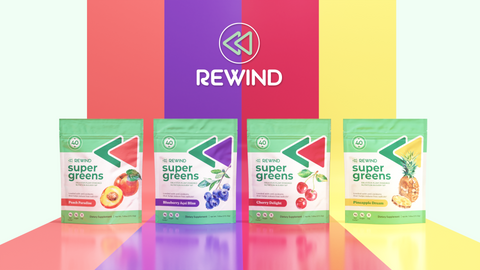
Cherry Delight
$39.99
Pineapple Dream
$39.99
Blueberry Acai Bliss
$39.99


