

Starting a daily greens routine is the easy part. The first few days have novelty working in their favor. You feel good about taking initiative with your health. The drink tastes fine, the scoop-and-stir ritual is simple, and the intention is strong. Then life interrupts. You travel for work and forget to pack it. You get sick and fall off for two weeks. The seasons change, your routine shifts, and the morning you used to associate with greens is now associated with a rushed coffee and an earlier alarm. Three months in, you have taken your greens powder maybe forty percent of the days you intended to.
This is the normal pattern for most nutritional supplements, and it matters enormously. The entire value proposition of a daily greens powder depends on consistency. The antioxidant protection is cumulative. The adaptogenic effects build over months. The micronutrient baseline that supports energy, immunity, and cognitive function requires daily replenishment, not occasional bursts. A forty percent adherence rate is not forty percent of the benefit. It is closer to ten percent, because the compounding nature of daily nutritional support means consistency multiplies the returns while inconsistency eliminates them.
This guide addresses habit formation directly and practically. How habits actually form in the human brain. What makes nutritional habits specifically fragile. The strategies research shows are most effective for building long-term supplement adherence. And the specific adaptations to keep your greens habit alive across the four seasons, holidays, travel, illness, and every other life event that will test it across the coming year.
Research on habit formation has found that the popular claim of twenty-one days is a significant underestimate for most people and most behaviors. Studies examining real-world habit formation for health behaviors found a median time of 66 days for a new behavior to become automatic, with a range from 18 to 254 days depending on the complexity of the behavior, the individual, and the context. Simpler behaviors in stable contexts become habitual faster. Complex behaviors, or simple ones attempted in frequently changing contexts, take much longer.
Taking a greens drink in the morning falls in the middle of this range. The behavior itself is simple. The challenge is the variable morning context that modern life creates. Different wake times on different days, travel disrupting morning routines, household changes that alter the environmental cues the habit depends on. Building the habit requires deliberate strategy during the formation period, approximately two to three months, after which the automaticity that makes habits genuinely effortless takes over.
Health habits are uniquely vulnerable to the absence of immediate reward feedback. The greens drink you take today will not make you visibly healthier by tomorrow. The benefit is physiological and cumulative, operating over weeks and months below the threshold of conscious perception. This is fundamentally different from habits that produce immediate sensory reward, like coffee in the morning, where the effect is felt within twenty minutes. Without immediate reward, the motivational drive that initiated the habit fades as novelty wears off, leaving only the abstract knowledge that the habit is good for you, which research consistently shows is insufficient to sustain behavior in the long term.
The practical implication is that building a lasting greens habit requires creating either external accountability structures, environmental cues that trigger the behavior automatically, or genuine intrinsic motivation anchored in something more tangible than general health improvement. All three strategies are supported by research, and the most resilient habits typically use at least two simultaneously.
The most powerful habit-formation technique is behavioral anchoring, or habit stacking. This means identifying a behavior you already perform without fail every morning and attaching your greens routine directly to it. The most effective anchor for most people is either making their morning coffee or brushing their teeth. The rule becomes: after I start the coffee maker, I take my greens. Or: before I brush my teeth, I take my greens. The existing behavior becomes a reliable cue that triggers the new one.
The anchor should be something that happens before the morning rushes. Once the day starts in earnest, with emails, children, commutes, and demands arriving, the odds of a deliberate 30-second health action happening reliably drop significantly. The morning window, before the day claims you, is where the habit needs to live, and the anchor behavior is what keeps it there even when motivation is absent.
The greens powder should be on the counter, not in a cupboard. The glass or shaker should be ready. The scoop should be inside the container or on the counter beside it. Every barrier between intention and action, including opening a drawer, finding the measuring spoon, searching for the glass, reduces the probability of the habit happening on the days when motivation is lowest. Research on behavior change consistently shows that reducing friction by even small amounts produces disproportionately large improvements in habit completion rates, because habits break on the hard days, and the hard days are precisely when everything that requires effort gets deprioritized.
Travel is the most common habit disruptor for daily supplements. The protocol that makes a greens habit travel-proof is simple but needs to be set up in advance. Invest in a travel container that holds two weeks' worth of individual daily servings. Pre-portion the servings into small zip-lock bags or single-serve containers before any trip. Pack the container with your toiletries, not with your luggage, so it is always accessible regardless of whether checked bags are lost. When you arrive at any accommodation, the greens container comes out alongside your toothbrush. Same placement, same anchor behavior, same habit.
The most durable habits are anchored to identity rather than outcomes. The person who thinks of themselves as someone who takes care of their nutrition daily will take their greens even on days when they do not feel like it, because skipping would conflict with their self-concept rather than just their goal. Building this identity takes time and deliberate framing. Telling other people about the habit, tracking streaks visually on a calendar, or simply noticing and acknowledging each consecutive day of completion all reinforce the identity layer over the motivational layer, creating a habit that persists when outcomes are not yet perceptible and motivation fluctuates with daily life.
Summer is the season most likely to disrupt a greens routine through travel, relaxed schedules, social events, and the general informality that warmer months bring. The strategies that preserve the habit through summer are the travel protocol described above, the smoothie upgrade that makes the greens drink a genuine summer pleasure rather than a chore, and permission to be flexible about timing while maintaining the non-negotiable daily frequency. A greens drink after a beach day instead of before it still counts. The day count is what matters, not the exact clock time.
When daily routines shift with the back-to-school or back-to-office transitions of autumn, habits anchored to specific morning contexts can unravel if the context changes. Autumn is the time to consciously re-anchor the habit to whatever the new morning routine looks like. If the school drop-off changes your timing, find the new anchor in the new routine. The behavior does not need to stay locked to a specific time. It needs to stay locked to a reliable cue, and that cue may need to be consciously updated as seasonal life transitions occur.
The science of long-term health behavior adherence is well-established across multiple research populations.
A daily greens habit that lasts all year is worth vastly more than a greens routine you do enthusiastically for two weeks and sporadically thereafter. The antioxidant protection, the adaptogenic stress resilience, the micronutrient baseline, the prebiotic gut support, and the immune and inflammatory support that a daily greens powder provides are all cumulative benefits that require daily consistency to deliver. Occasional use delivers occasional benefit. Daily consistency delivers compounding returns.
Anchor the behavior. Remove the friction. Travel-proof the protocol. Build the identity. Track the streak. These are not tips for the dedicated. They are the mechanisms that behavioral research shows turn intentional actions into automatic ones, the bridge between what you intend to do for your health and what you actually do, every day, without thinking about it.
Morning is both physiologically optimal and practically superior for habit formation. The morning provides the most reliable behavioral anchor opportunities, the least competition from other urgent demands, and the best absorptive state for micronutrient delivery after overnight fasting. People who anchor their greens drink to the morning demonstrate significantly higher long-term consistency than those who take it at variable times depending on remembering it.
Miss one day and resume the next, without adjustment, extra doses, or self-criticism. The research on habit disruption shows that single missed instances have minimal impact on long-term habit maintenance if the individual resumes immediately without treating the miss as a failure state. The psychological pattern to avoid is the all-or-nothing thinking that treats one missed day as evidence that the habit has failed, which tends to produce extended breaks rather than simple single-day misses.
Consistency of timing matters more than the specific time, because habits form around reliable contextual cues, and varying timing removes the environmental cue reliability that automatic habit performance depends on. If your schedule varies significantly, choose one anchor behavior that is consistent regardless of what time it occurs, such as always taking your greens alongside your toothbrushing, rather than anchoring to a specific clock time that varies.
Rotate through the smoothie recipes seasonally to prevent flavor fatigue. Mix with coconut water or cold-pressed juice on days when plain water feels monotonous. Invest in a quality shaker bottle that makes the preparation feel considered rather than perfunctory. Add fresh mint or a slice of lemon to the glass. The sensory experience of taking your greens does not need to be merely tolerable. Making it genuinely pleasant on most days is a legitimate and research-supported strategy for maintaining long-term adherence.
These are the periods when the habit is most likely to break and also the periods when it is most nutritionally valuable. The strategy for illness is to simplify to the absolute minimum: greens in cold water, nothing else required. No smoothie prep, no measuring, just scoop and drink. For high-stress periods, lean on the anchor behavior, which should fire automatically regardless of how you feel, and acknowledge the streak protection value of the single daily habit that keeps your nutritional foundation in place even when everything else is compromised.
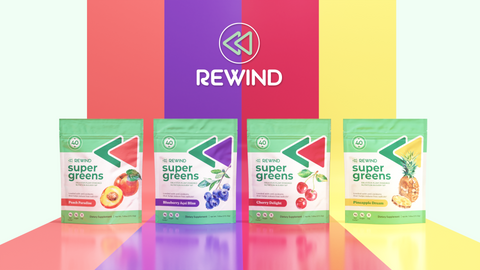
Cherry Delight
$39.99

Pineapple Dream
$39.99
Blueberry Acai Bliss
$39.99


