

Walk into a farmers market in October and you will see a whole new lineup. Bins of crisp apples. Piles of orange pumpkins and winter squash. Bundles of dark leafy greens. Sweet potatoes, pears, beets, and Brussels sprouts still on the stalk. Fall is one of the best times of year to eat well, because so many delicious, colorful foods are at their peak right now.
Eating with the seasons simply means choosing fruits and vegetables that are being harvested at that time of year. It is one of the easiest ways to get more flavor, more nutrition, and often better prices from your food. This guide walks you through why seasonal eating matters, what to look for this fall, how to store and cook your produce so it keeps its goodness, and how a daily greens drink can help fill the gaps as the growing season winds down.
Yes, in many cases. Fruits and vegetables keep changing after they are picked. Some of their vitamins, especially vitamin C, start to fade over time. Studies have found that produce stored in the fridge for days can lose a noticeable amount of vitamin C and some of the natural color compounds that make plants so good for you. Produce that is picked ripe and eaten soon after usually holds on to more of what makes it healthy.
When you eat what is in season, there is a better chance your food was picked recently and grown closer to home. Out-of-season produce often travels long distances and sits in storage before it reaches your kitchen. That does not make it bad food. It just means seasonal produce often has a head start.
Seasonal produce simply tastes better. A fall apple picked this month is crisp and juicy in a way a spring apple from cold storage cannot match. When food tastes great, you naturally want to eat more of it. Seasonal produce is also often cheaper, because there is plenty of it. And eating with the seasons adds natural variety to your meals over the year, so you are not eating the same five vegetables on repeat.
Apples are the star of fall, with hundreds of varieties to try, from tart Granny Smith to sweet Honeycrisp. Pears are juicy and soft this time of year. Grapes, cranberries, and pomegranates bring bright color and tang. In many areas, you will also find persimmons, figs, and late-season plums. Try picking one new fruit each week that you have never bought before.
Fall vegetables are hearty and filling. Look for pumpkins and winter squash like butternut, acorn, and spaghetti squash. Sweet potatoes, carrots, beets, turnips, and parsnips are sweet and earthy root vegetables that roast beautifully. Broccoli, cauliflower, cabbage, and Brussels sprouts love cool weather. Leafy greens like kale, Swiss chard, collards, and spinach grow well into the fall and often taste sweeter after a light frost.
A simple way to eat well is to fill your plate with many colors. Each color in plants comes from different natural compounds, and each one helps your body in its own way. Orange foods like pumpkin, carrots, and sweet potatoes bring the plant pigment your body turns into vitamin A, which supports your eyes and skin. Dark green foods like kale and broccoli bring folate, vitamin K, and minerals. Red and purple foods like beets, cranberries, grapes, and red cabbage bring their own deep-colored plant protectors. The more colors you eat, the wider the mix of helpful plant compounds you get.
Both matter. Most people know they should eat more fruits and vegetables. Large studies have found that people who eat more produce tend to have lower rates of heart disease and live longer. But research also suggests that the number of different fruits and vegetables you eat matters too. In one large study that followed adults for 11 years, people who ate the widest variety of fruits and vegetables each week were less likely to develop type 2 diabetes, even after accounting for how much they ate overall.
This makes sense. Every plant brings a slightly different mix of vitamins, minerals, fiber, and natural compounds. When you eat the same few foods over and over, you miss out on everything else. Fall is the perfect time to branch out, because there are so many new options showing up at the store and market.
Start small. Add one new vegetable to your cart each week. Swap your usual side dish for a roasted mix of three or four fall vegetables. Toss pomegranate seeds or apple slices into your salad. Use a different leafy green each week, like kale one week and Swiss chard the next. Keep a running list on your fridge of every different fruit and vegetable you eat in a week. It can turn variety into a fun little challenge.
Store apples in the fridge to keep them crisp much longer. Keep winter squash, pumpkins, and sweet potatoes in a cool, dark, dry spot, not the fridge. They can last for weeks or even months. Store leafy greens in the fridge wrapped loosely in a damp paper towel inside a bag or container. Root vegetables like carrots and beets keep best in the fridge with their leafy tops removed. Try to eat delicate greens within a few days of buying them, since they lose freshness quickly.
Yes. Frozen produce is usually picked ripe and frozen quickly, which helps lock in many of its vitamins. In some cases, frozen fruits and vegetables can hold on to more vitamin C than fresh ones that have been sitting in the fridge for several days. Keeping bags of frozen broccoli, spinach, and berries in the freezer is a smart way to make sure you always have produce on hand, especially as winter arrives.
Roasting is one of the easiest and tastiest ways to cook fall vegetables. Toss chunks of squash, carrots, Brussels sprouts, or sweet potatoes with a little olive oil and salt, and roast until golden. The oil also helps your body take in the vitamins from orange and green vegetables that need a little fat to be absorbed. Steaming and quick sautéing are great for greens and broccoli. Soups and stews are another cozy way to enjoy fall produce, and you keep the vitamins that move into the broth.
No. Nothing replaces a plate full of colorful fruits and vegetables. Whole produce gives you fiber, water, and the satisfying crunch and flavor that powders cannot match. But even people who love vegetables find it hard to eat enough of them, and a lot of variety, every single day. That is where a daily greens drink helps.
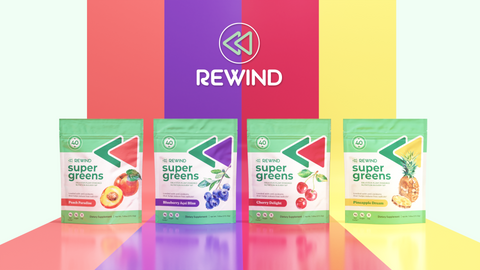
Rewind Greens brings 24 plant ingredients together in one serving. Many of them are the same kinds of foods that shine in fall. Organic Broccoli Powder and Spinach Leaf Powder bring dark green goodness. Carrot Powder brings the orange plant pigment. Apple Pectin comes from apples. Blueberry Powder, Bilberry Fruit Extract, Strawberry Fruit Powder, and Grapeseed Extract bring berry and grape colors. Barley Grass, Wheatgrass, Spirulina, and Nori Seaweed add plants most people never eat at all. Drinking it every morning gives your day a head start on variety, no matter what the produce aisle looks like.
As the weather turns cold, local harvests slow down and fresh choices shrink. Many people eat fewer fruits and vegetables in winter without even noticing. A daily greens drink is a simple, steady way to keep a wide mix of plant foods in your routine all year long, alongside the seasonal produce you enjoy at every meal.
Epidemiological and food science research supports both the quantity and variety of fruit and vegetable intake, as well as attention to post-harvest nutrient retention.
Fall is a gift for anyone who wants to eat better. The markets are full of colorful, flavorful produce that is at its best right now. Eating with the seasons gives you fresher food, better taste, and a natural way to add variety to your meals. And research suggests that variety, not just amount, matters for long-term health.
Fill your cart with apples, pears, squash, sweet potatoes, Brussels sprouts, kale, and beets. Store them well, cook them simply, and try something new each week. Then start every morning with your daily greens drink for a steady base of 24 plant ingredients. Together, they make it easy to eat the rainbow all fall and winter long.
Visit a local farmers market and see what is piled high. Many grocery stores also put seasonal produce at the front of the produce section and on sale. You can also search online for a seasonal produce guide for your state or region. In general, fall brings apples, pears, squash, root vegetables, cabbage-family vegetables, and hardy greens.
Both can be good choices, and neither is required to eat well. The most important thing is to eat plenty of fruits and vegetables, in a wide variety, however they fit your budget. Fresh, frozen, organic, conventional, and seasonal produce can all be part of a healthy diet.
Of course. Frozen berries are a great year-round option, and they are often picked and frozen at peak ripeness. Rewind Greens also includes Blueberry Powder, Bilberry Fruit Extract, and Strawberry Fruit Powder, so you get berry ingredients every day no matter the season.
Sweet potatoes are a great place to start. Poke a few holes in one, bake it until soft, and top it with a little butter, cinnamon, or salt and pepper. Roasted carrots and roasted broccoli are also simple and loved by most people, including kids.
There is no single magic number, but more variety is better. A fun goal is to try to reach 30 different plant foods in a week, counting fruits, vegetables, whole grains, beans, nuts, seeds, herbs, and spices. Your daily greens drink brings 24 plant ingredients on its own, which makes the rest of the goal much easier to reach.
Cherry Delight
$39.99
Pineapple Dream
$39.99
Blueberry Acai Bliss
$39.99


