

It is a Thanksgiving tradition almost as old as the pie. The meal ends. The plates are cleared. Someone sinks into the couch and says, "It must be the turkey." Soon half the room is nodding off. The story is so well known that most of us have repeated it ourselves.
But is turkey really the cause? Researchers have studied why people feel sleepy after eating. Their findings are more interesting than the turkey story. This guide explains what the studies show, why the myth is so popular, and what you can do to feel good after the big meal. You will also see where a daily super greens drink fits into a busy holiday week.
Turkey contains a natural building block of protein. Your body can use it to help make chemicals that play a part in sleep. That is where the idea started. If turkey has it, and it helps with sleep, then turkey must make you tired. The logic sounds neat and simple.
Many foods have the same building block. Chicken, eggs, cheese, nuts, and seeds all contain it. We do not hear about people getting sleepy after an omelet or a handful of almonds. Also, a Thanksgiving plate has much more than turkey. It has stuffing, rolls, potatoes, pie, and often a second helping. That is a lot of food in a short time. The research points more toward the size of the meal than toward any one food.
Yes. Many people feel it, and it is not a sign that something is wrong. Scientists sometimes call it a post-meal dip. It is common after any large meal, not just on holidays.
One lab study tested this directly. Volunteers ate meals that were high in fat, high in carbohydrates, or a mix of both. Later, researchers measured how fast each person fell asleep during a short nap. The type of meal made no difference to how fast people fell asleep. The authors concluded that what the meal was made of did not seem to affect sleepiness.
The same study compared a solid meal with a liquid meal and with plain water. People fell asleep faster after the solid meal than after drinking the same amount of water. So eating a real meal, one that fills your stomach, seemed to matter more than whether it was heavy in fat or in carbohydrates.
A study from a sleep research center in England looked at lunch size in a real driving test. People drove for a long stretch after either a light lunch or a heavy one. After the heavy lunch, the drivers drifted out of their lane more often. Their brain waves also showed more sleepiness. They also tended to rate themselves as sleepier, though that difference was smaller. Everyone grew sleepier the longer they drove, whatever they ate.
Yes. The same researchers explained that the early afternoon dip is part of the body's daily rhythm. It happens even if you skip lunch. It also gets worse when you did not sleep well the night before. So a big Thanksgiving meal in the afternoon can land right on top of a time when your body is already getting sleepy.
A trial in older adults compared a Mediterranean-style meal with a rich Western-style meal that had the same energy. Researchers measured attention and mood for hours afterward. The type of meal had no important effect on attention or mood. People felt generally good in both cases. That fits with the other research. What was in the meal mattered less than people expected.
These studies are small, and some are older. People vary a lot, and results can differ. Researchers still do not fully understand why we feel sleepy after eating. What we can say is that the big-meal effect looks real, and that a single ingredient like turkey is not a strong explanation.
Serve yourself a modest first plate. Wait 15 to 20 minutes before deciding about seconds. This gives your body time to tell you how full you are. If you are still hungry, have a little more. Many people find they want less than they thought.
Put the fork down between bites. Talk. Taste the food. Holiday meals are about the people at the table. Eating slowly makes the meal last longer and often feels better afterward.
Add roasted vegetables, a green salad, or green beans to your plate. They take up room and add color and fiber. They also leave a little less room for the heavier dishes. You do not have to give up the foods you love. You just add some balance.
Since the afternoon dip is worse after a short night, try to get enough rest the night before. If you are hosting, this can be hard. Do as much prep as you can the day before, and go to bed at a regular hour.
A walk after dinner is a lovely tradition for many families. Games, a football toss, or clearing the table together also get everyone moving. Know that this is mostly about enjoying the time together. In the older-adult trial mentioned above, resting did as well as walking for attention. So there is no need to feel guilty if you want to sit down.
If dinner is served in the early afternoon, expect that natural dip to arrive right after the meal. Plan for it. Save the dishes for later, or share the cleanup so no one is stuck with it. Set out a low-key activity like a card game, a puzzle, or a family movie. Keep snacks light, like fruit and nuts, so people are not tempted to keep eating through the afternoon. A little planning makes the dip feel like part of the day instead of a surprise.
The driving study is a good reminder. If you have a long drive after a big meal, wait a while before you leave. Take breaks on the road. Pull over somewhere safe if you start to feel drowsy. Never push through sleepiness behind the wheel. If you are traveling, let someone else drive if they are more alert.
Feeling sleepy after a big meal is normal. But if you feel very sleepy after most meals, or you feel tired a lot even when you sleep well, talk with your doctor. That is not something to ignore or to fix with food alone.
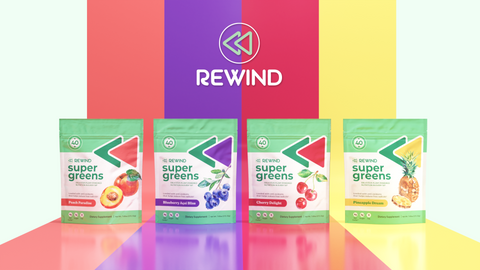
No, and it is not meant to. A super greens drink is not a treatment for sleepiness. It is a simple daily habit that adds plant variety to your day. It can be a nice part of a morning routine, especially in a week when your normal schedule is thrown off.
Each serving of Rewind Greens brings 24 plant ingredients into one glass. These include Spinach Leaf Powder, Organic Broccoli Powder, Barley Grass Powder, Wheatgrass Powder, Spirulina, and berry ingredients like Blueberry Powder and Bilberry Fruit Extract. Mixing it takes about 30 seconds. That makes it easy to keep up, even when the kitchen is busy.
Drink it in the morning before the cooking starts. Pair it with a real breakfast, so you do not arrive at the big meal very hungry. Arriving very hungry can lead to a very big first plate. A steady breakfast, water through the day, and a modest first plate make a good combination.
Small laboratory studies and a realistic driving study have examined sleepiness after meals of different types and sizes.
Turkey has taken the blame for Thanksgiving sleepiness for generations. The research tells a more careful story. In lab studies, a solid meal made people fall asleep faster than water, but the makeup of the meal did not matter much. In a driving study, a heavy lunch led to more drifting and more signs of sleepiness. And the early afternoon dip happens anyway, especially after a short night.
You do not have to skip the turkey or the pie. Serve a modest first plate, eat slowly, add vegetables, and sleep well the night before. Take a walk if you like, or rest if you need to. Drive only when you are alert. And keep your morning super greens habit going through the holiday week, as one easy piece of a steady routine.
Turkey does contain it, but so do many other foods, including chicken, eggs, cheese, and nuts. Research on post-meal sleepiness points to meal size and timing more than to any single food.
There is a natural dip in the early afternoon as part of the body's daily rhythm. It happens even if you skip lunch. A heavy lunch may add to it, and a poor night of sleep can make it stronger.
Staying hydrated is a good habit all day. The research we reviewed did not test water as a fix for sleepiness. Think of water as a general good habit, not as a cure.
A short nap is fine for most people. If you have a long drive ahead, plan your rest first so you are alert behind the wheel. If you nap too long or too late, it may be harder to fall asleep at night.
A super greens drink is not a cure for sleepiness. It is a simple habit that adds plant variety to your day. For afternoon energy, sleep, regular meals, and moderate portions matter most.
Cherry Delight
$39.99
Pineapple Dream
$39.99
Blueberry Acai Bliss
$39.99


