

Energy drinks are one of the most commercially successful product categories in modern consumer history. Global sales exceed $90 billion annually and continue growing. The promise is simple: open a can, feel energized, perform better. For millions of people managing demanding schedules, early mornings, late nights, and the relentless pace of modern productivity culture, that promise is genuinely appealing.
The problem is not that energy drinks do not work. The acute alertness boost from a high-caffeine, high-sugar beverage is real and reproducible. The problem is what that boost costs, what it does to the body when consumed regularly, and what opportunity is forfeited when a can of chemical stimulants replaces a genuine daily nutritional investment. This blog provides an honest, research-based comparison between what energy drinks actually deliver and what a daily super greens drink provides instead, not as a sales pitch but as a practical analysis of the difference between masking fatigue and addressing its root cause.
The energy drink category is diverse but most mainstream products share a core formula: very high caffeine, typically 150 to 300 milligrams per can compared to the 80 to 100 milligrams in a standard cup of coffee, combined with large quantities of added sugar or artificial sweeteners, B vitamins at doses far above recommended daily values, taurine, and often guarana as an additional caffeine source. Some products add herbs including ginseng or ginkgo at token doses, and some include amino acids like L-carnitine.
The actual energy production from these ingredients comes almost entirely from the caffeine and sugar. The B vitamins in energy drinks are present at very high doses but in synthetic form and in quantities far exceeding what the body can actually use, with most being excreted in urine. The taurine has no documented energy-producing effect in humans. The herbal ingredients are present at amounts far below any clinically studied therapeutic dose. The honest description of what an energy drink delivers is: a large, fast caffeine dose with a large sugar dose. Everything else is largely cosmetic.
A standard 16-ounce energy drink typically contains 50 to 60 grams of sugar, equivalent to approximately 12 to 15 teaspoons. This sugar load produces a rapid spike in blood glucose followed by an insulin-mediated crash approximately 60 to 90 minutes later. For most energy drink consumers, the solution to the crash is another can, creating the dependency cycle that energy drink marketing quietly relies upon. The total caffeine exposure from two or more cans in a day, which is not uncommon among habitual energy drink consumers, approaches or exceeds 500 milligrams, a dose associated with documented cardiovascular effects including elevated heart rate, increased blood pressure, and arrhythmia risk in susceptible individuals.
Research on energy drink consumption and cardiovascular health has consistently documented concerning findings across multiple study designs. Acute consumption of energy drinks produces measurable increases in heart rate and blood pressure in healthy young adults. Cardiac arrhythmia risk, including QT interval prolongation, has been documented in clinical case reports and prospective studies. The combination of very high caffeine with taurine and other additives appears to produce cardiovascular effects that exceed what caffeine alone at the same dose would produce, suggesting additive or synergistic mechanisms.
Emergency department visits attributed to energy drink consumption have increased dramatically in the two decades since the category became mainstream. The FDA has received thousands of adverse event reports associated with energy drinks, including cardiac events in young, otherwise healthy individuals. The American Academy of Pediatrics has called for banning energy drink sales to anyone under 18. These are not marginal concerns about edge-case scenarios. They are documented population-level consequences of a product category that markets aggressively to young adults while its safety profile warrants serious caution.
Caffeine has a half-life of five to six hours in most adults, meaning that half the caffeine from an afternoon energy drink is still active at midnight. Regular evening or afternoon energy drink consumption produces a well-documented pattern of sleep disruption: longer time to fall asleep, reduced slow-wave deep sleep, earlier morning waking, and reduced next-day cognitive performance as a result of the fragmented sleep. The response to this sleep-related fatigue is, predictably, another energy drink the following day, perpetuating the cycle.
Chronic high-caffeine intake also dysregulates the HPA axis stress response, suppressing the cortisol awakening response over time and producing a pattern of blunted morning alertness that creates dependence on exogenous stimulants rather than supporting the body's natural energy regulation. The person who has consumed energy drinks daily for months typically has a significantly worse natural energy baseline than before they started, masked by the artificial stimulation.
A greens drink does not create immediate acute energy. This is the honest starting point for any comparison. What it does is address the nutritional deficiencies that create the underlying fatigue that energy drinks mask. B vitamins from Spirulina support the cellular energy pathways, specifically the Krebs cycle and electron transport chain, that convert food into ATP at the mitochondrial level. Iron from Spirulina supports the hemoglobin that delivers oxygen to cells for aerobic energy production. Magnesium from Barley Grass and Wheatgrass supports the ATP synthase enzyme that is the final step of cellular energy production. When these nutrients are consistently adequate, the cellular machinery of energy production runs at its designed efficiency, and the subjective experience is genuine energy rather than stimulant-masked depletion.
The Green Tea Extract in a greens formula does provide caffeine, approximately 30 to 50 milligrams in a standard serving alongside EGCG catechins that moderate and extend its effect. This is enough to provide gentle, smooth alertness without the spike-and-crash dynamic of 200-plus milligrams of caffeine on an empty stomach. The difference between the alertness profile of a greens drink and an energy drink is the difference between a gentle, sustained rise and a steep spike followed by a cliff.
A greens drink adds concentrated plant polyphenols from Quercetin, Resveratrol, EGCG, Blueberry, Bilberry, and Grapeseed Extract that reduce systemic inflammation, support cardiovascular health, and protect cells from oxidative damage. It adds adaptogenic HPA axis support from Siberian Ginseng and Astragalus that builds genuine stress resilience over time. It adds Vitamin C from Acerola for adrenal function and immune defense. It adds Lutein for retinal health. It adds Ginkgo Biloba for cerebral circulation and cognitive support. It adds Vitamin K from Spinach and Broccoli for bone health. It adds a complex of minerals that support nerve function, sleep quality, and metabolic efficiency.
A regular energy drink habit, over months and years, subtracts sleep quality through chronic caffeine-induced sleep disruption. It subtracts insulin sensitivity through repeated high-sugar blood glucose spikes. It subtracts natural energy regulation capacity through HPA axis desensitization. It contributes to cardiovascular risk through documented effects on heart rate, blood pressure, and cardiac electrical stability. The comparison is not between two products that both give you energy in different ways. It is between a product that depletes your biology to produce a temporary performance simulation and a product that nourishes your biology to support genuine, sustained performance.
Cold turkey elimination of high-caffeine energy drinks typically produces withdrawal symptoms including headaches, irritability, and fatigue for three to five days, as the adenosine receptors that caffeine has been blocking re-sensitize to their normal signaling. A more sustainable transition strategy is to replace one energy drink at a time with a greens drink, starting with the one that has the least tactical importance in the day. The greens drink provides enough caffeine from Green Tea Extract to help bridge the caffeine reduction, and the B-vitamin and mineral support begins addressing the underlying fatigue within two to four weeks.
During the transition period, expect to feel less acutely energized than you did with energy drinks. This is appropriate. The acute energy of energy drinks is a pharmacological simulation of alertness, not a reflection of genuine energy availability. As the transition weeks pass and the cellular energy pathways begin operating more efficiently on better nutritional support, the baseline shifts upward. By week four to six, most people who have completed the transition describe their energy as more stable, more genuine, and less dependent on the next dose than it was with energy drinks.
The adverse health effects of energy drink consumption and the health benefits of plant-based nutritional approaches represent well-documented and contrasting bodies of evidence.
Energy drinks work in the narrowest sense: they temporarily create the subjective experience of alertness by blocking adenosine and spiking blood glucose. They do this at a documented physiological cost and with a built-in dependency mechanism that makes the energy they appear to provide increasingly expensive to sustain over time. They are, in the most practical sense, borrowed energy that must be repaid with interest through disrupted sleep, depleted natural energy regulation, and long-term cardiovascular and metabolic burden.
A daily greens drink works differently and on a different timeline. It does not replace the immediate pharmacological kick of 200 milligrams of caffeine. It replaces the biological conditions that make such a kick seem necessary in the first place: the B-vitamin insufficiency that impairs cellular energy production, the magnesium deficit that reduces sleep quality, the iron inadequacy that limits oxygen delivery, the adaptogen deficit that makes ordinary stress feel overwhelming. Fixing the foundation takes weeks. But what you are left with is energy that is genuinely yours, not borrowed from tomorrow.
Yes. Coffee consumed in moderate amounts, typically one to two cups daily, has a well-established safety profile and even documented health benefits in research. The difference between a greens drink plus moderate coffee and an energy drink habit is both quantitative, much lower total caffeine and no added sugar, and qualitative: the greens drink adds genuine nutritional benefit alongside its moderate caffeine contribution, while energy drinks add high-dose caffeine and sugar alongside documented health risks.
Sugar-free energy drinks eliminate the blood glucose spike and insulin-mediated crash of their sugar-containing counterparts, which is a genuine improvement. However, the very high caffeine content that is the primary driver of the adverse cardiovascular effects remains unchanged, and the artificial sweeteners introduce their own concerns including gut microbiome disruption and alterations in insulin sensitivity signaling. Sugar-free is less damaging but not safe for regular consumption.
The energy drink category has expanded to include products with lower caffeine doses, adaptogenic ingredients, and cleaner formulas. The best of these products share meaningful overlap with what a greens drink provides, particularly if they include B vitamins, plant adaptogens, and moderate caffeine from natural sources. The distinction that matters most is whether the product is designed to nourish your biology or stimulate it. Products that genuinely nourish daily nutrition are worth considering alongside or instead of conventional energy drinks.
Caffeine dependence, defined as a physiological dependence marked by withdrawal symptoms on cessation, can develop within one to two weeks of regular daily consumption at the doses typical in energy drinks. This is why the energy drink habit so commonly becomes a daily requirement rather than an occasional choice: the perceived energy benefit of the first few days becomes the maintenance dose required to function at the baseline that existed before the habit started.
No, in both quantity and quality. A standard greens drink serving provides approximately 30 to 50 milligrams of naturally occurring caffeine from Green Tea Extract alongside EGCG catechins that moderate its absorption and extend its effect over time. This produces gentle, sustained alertness without the spike-and-crash pattern of the 150 to 300 milligrams of fast-absorbing caffeine in a typical energy drink. The comparison is analogous to the difference between a cup of green tea and a triple espresso with Red Bull chased behind it.
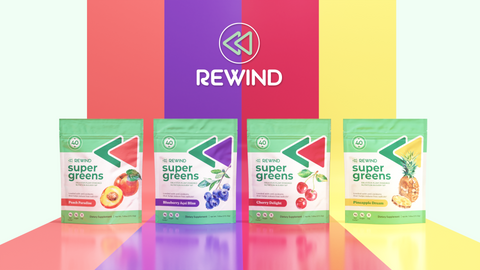
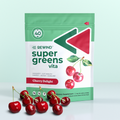
Cherry Delight
$39.99

Pineapple Dream
$39.99
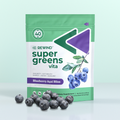
Blueberry Acai Bliss
$39.99


