

The workout itself is only half the equation. What happens in the 48 hours that follow determines how much of the training stimulus actually converts into the adaptation you trained for. Muscle protein synthesis, glycogen restoration, tissue repair, inflammation resolution, and immune recalibration all depend on the nutritional environment available during the recovery window. Get this right and the workout produces adaptation. Get it wrong consistently and you accumulate damage faster than you repair it, eventually expressing as overtraining, chronic soreness, increased injury risk, and stalled progress.
Exercise recovery nutrition is a well-researched field, and the fundamentals are straightforward: protein for muscle synthesis, carbohydrates for glycogen restoration, fluids and electrolytes for rehydration, and antioxidants to manage the exercise-induced oxidative burst. What is less often discussed is the role of the broader micronutrient and plant polyphenol foundation in supporting the recovery processes that operate below the level of macronutrients and that a typical sports nutrition approach largely ignores. A daily greens drink is not a post-workout shake. But it is one of the most practical ways to ensure the nutritional infrastructure that recovery depends on is consistently in place, every training day and every rest day.
Exercise, particularly resistance training, creates microdamage to muscle fibers. This damage triggers an inflammatory response and, in the context of adequate nutrition, a repair process called muscle protein synthesis that rebuilds those fibers larger and stronger than before. Muscle protein synthesis elevates above baseline within hours of training and remains elevated for approximately 24 to 48 hours, with the window of maximum elevation typically occurring in the first 4 to 6 hours post-exercise. This is why post-workout protein timing is emphasized in sports nutrition: the elevated synthesis rate during this window means dietary amino acids are most efficiently directed toward muscle repair and growth during this period.
Beyond this protein synthesis window, the recovery process continues for the full 48-hour period. Glycogen stores depleted during training are restored through carbohydrate intake over the following day. Inflammatory processes initiated by the exercise-induced muscle damage progress through their resolution phase, with immune cells clearing debris and tissue-repair processes restoring damaged structures. Mitochondrial adaptation begins, with the cellular signals from the training session driving the production of new mitochondria over the following 24 to 48 hours. All of these processes have micronutrient dependencies that daily nutrition either meets or leaves partially supported.
Exercise increases oxygen consumption by 10 to 20 times above resting levels, and a small but significant fraction of that oxygen is converted to reactive oxygen species in the mitochondria of working muscle cells. This exercise-induced oxidative burst serves a legitimate purpose: it is a primary trigger for the beneficial adaptations of training, including mitochondrial biogenesis, antioxidant enzyme upregulation, and the cellular signaling that drives strength and endurance improvements. However, when the oxidative burden exceeds the capacity of the endogenous antioxidant defense system, the result is oxidative damage to muscle proteins and membranes that slows recovery and extends soreness.
Research on antioxidant nutrition and exercise recovery has found a nuanced picture: very high doses of isolated antioxidant supplements can blunt the beneficial adaptive signals of exercise-induced ROS, which is counterproductive. But consistent daily intake of the dietary antioxidants from whole plant sources and food-matrix supplements supports the endogenous antioxidant enzyme system without overwhelming the signaling function of moderate ROS production. A daily greens drink provides the plant polyphenol and vitamin antioxidant support that maintains the body's defensive capacity during heavy training without suppressing the hormetic benefits of exercise-induced oxidative stress.
Quercetin has been studied specifically in the context of exercise recovery and has shown the most consistent evidence of any single polyphenol for reducing post-exercise muscle damage markers and inflammatory cytokines. Research has found that consistent Quercetin supplementation over several weeks reduces creatine kinase, a biomarker of muscle damage, and IL-6 following strenuous exercise. Its primary mechanism in this context is inhibition of the NF-kB inflammatory pathway that drives the pro-inflammatory cytokine cascade following muscle damage, allowing the repair process to proceed in a lower-inflammation environment without the excessive inflammatory overshoot that produces prolonged soreness.
Critically, Quercetin achieves this anti-inflammatory effect through a mechanism that does not suppress the beneficial adaptive signals of exercise, unlike high-dose vitamin C or E supplementation. It specifically targets the pro-inflammatory inflammatory overshoot without interfering with the myokine signaling that drives muscle adaptation, making it the polyphenol most aligned with supporting recovery without compromising training benefits.
Blueberry anthocyanins have been studied specifically for exercise recovery with consistently positive findings. Research has found that blueberry consumption before and after exercise significantly reduces exercise-induced oxidative stress, attenuates delayed onset muscle soreness, and maintains muscle function better than control during the 48-hour recovery window. The mechanism involves multiple anthocyanin-mediated antioxidant and anti-inflammatory actions operating in muscle tissue, including direct free radical scavenging, inhibition of cyclooxygenase enzymes, and upregulation of Nrf2-dependent antioxidant enzyme expression in muscle cells.
Bilberry Fruit Extract provides similar anthocyanin classes with additional relevance to vascular function in muscle tissue, supporting the microvascular blood flow that delivers oxygen and nutrients to recovering muscle fibers. Better microvascular function during the recovery window means more efficient nutrient delivery to the repair sites, contributing to faster functional recovery between training sessions.
Spirulina has been studied directly in the context of exercise and consistently shows benefits for both performance and recovery. Its phycocyanin reduces the pro-inflammatory cytokine response to exercise-induced muscle damage, reducing the inflammatory component of delayed onset muscle soreness. Its comprehensive B-vitamin content supports the metabolic pathways that restore glycogen and ATP after training. Its iron supports the oxygen delivery that powers the aerobic recovery processes. And its complete protein contributes a modest but meaningful addition to the post-workout amino acid pool available for muscle protein synthesis.
Research comparing Spirulina-supplemented athletes to controls has found lower oxidative stress markers after exercise, better endurance performance, and faster recovery of muscle function in the Spirulina groups. These findings reflect the multiple simultaneous mechanisms through which Spirulina supports the physiology of training adaptation.
Vitamin C has a documented role in post-exercise recovery through its function in collagen synthesis. Exercise places significant mechanical stress on tendons, ligaments, and the connective tissue scaffolding of muscle, and the collagen synthesis required to maintain and strengthen these structures depends directly on Vitamin C as an essential cofactor. Research has found that Vitamin C supplementation supports tendon and ligament collagen synthesis after exercise, particularly when combined with dietary gelatin or collagen protein. Consistent daily Vitamin C from Acerola Extract in a greens drink supports this connective tissue maintenance function throughout the training week, reducing the cumulative connective tissue stress that insufficient Vitamin C allows to accumulate.
For recovery purposes, daily consistency matters far more than precise daily timing relative to the workout. The antioxidant and anti-inflammatory mechanisms of the greens formula operate over days and weeks of consistent use, maintaining higher baseline levels of the compounds that support recovery rather than producing acute post-workout effects. A greens drink taken every morning provides consistent daily nutritional support for whatever training you do that day or the previous day.
That said, if you train in the evening and your morning greens habit is your only greens intake, the morning dose will have been metabolized by the time your evening workout produces its oxidative and inflammatory response. For athletes training at high volumes, a second serving of greens powder dissolved in water and consumed within a couple hours post-training may provide additional recovery support during the acute post-exercise window. But this is an optimization relevant primarily to high-frequency training athletes, not to the recreational exerciser whose daily morning greens habit is already providing consistent recovery nutritional support.
The evidence for plant-based nutrition in supporting exercise recovery is well-developed and growing.
Exercise recovery is not just what you eat in the 30 minutes after a workout. It is the nutritional foundation you carry into every training session and every recovery day that determines how completely and efficiently your body adapts to the training you give it. The macronutrients, protein, carbohydrates, and fluids are the well-understood fundamentals. The micronutrient and plant polyphenol foundation, the anti-inflammatory Quercetin, the anthocyanins from Blueberry and Bilberry, the phycocyanin from Spirulina, the Vitamin C from Acerola, and the broader antioxidant network of a daily greens formula, is the less-discussed but equally important dimension of recovery nutrition that most athletes leave partially addressed.
Drink your greens every morning. Train hard. Let your body do what it is designed to do with the materials your nutrition provides. The athlete who maintains a consistent daily nutritional foundation does not just recover faster than the one who relies on protein shakes and energy gels alone. They adapt better, get injured less, and keep training year after year because the infrastructure of their recovery is built on something solid.
The Quercetin Dihydrate and berry anthocyanins in a greens formula have the most directly documented evidence for reducing delayed onset muscle soreness, with research showing lower perceived soreness scores and faster restoration of muscle function in the 24 to 48 hours post-exercise. These effects are most consistent in research when the polyphenols are consumed consistently for multiple weeks before the exercise bout rather than as a single acute dose, supporting the daily habit approach rather than reactive supplementation.
Yes, and this is one of the most nutritionally complete post-workout combinations available. The protein provides amino acids for muscle synthesis, and the greens powder provides the antioxidant, anti-inflammatory, and micronutrient support that makes that synthesis process more efficient. The fat in any milk used for the shake also improves absorption of fat-soluble compounds from the greens formula. This combination addresses three of the four recovery nutrition pillars in a single serving.
Stick to the standard daily serving regardless of training load. The anti-inflammatory and antioxidant mechanisms of the greens formula operate through cumulative daily exposure rather than dose escalation, and the research showing recovery benefits uses consistent daily supplementation rather than increased dosing on hard training days. Consistency seven days a week, training or rest days, provides the nutritional foundation that recovery depends on far more effectively than variable dosing strategies.
Yes. Siberian Ginseng has documented evidence for improving endurance performance, reducing perceived exertion, and supporting recovery from physical stress in research on both athletes and non-athletes. These adaptogenic benefits operate through HPA axis normalization and mitochondrial efficiency support, complementing the antioxidant and anti-inflammatory recovery mechanisms of the formula's polyphenols. Both the performance and recovery benefits of Siberian Ginseng build over weeks of consistent daily use.
Most people who train regularly notice some recovery improvement within two to four weeks of consistent daily greens use, primarily from the correction of any micronutrient deficiencies and the initial reduction in baseline inflammatory markers. The more significant recovery benefits from the adaptogenic support and the fully developed antioxidant enzyme upregulation from consistent polyphenol intake typically emerge over six to twelve weeks of daily use, making the initial months of the greens habit the most important period to protect.


Cherry Delight
$39.99

Pineapple Dream
$39.99
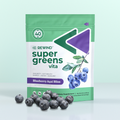
Blueberry Acai Bliss
$39.99


