

The Mediterranean diet is one of the most studied and consistently validated dietary patterns in nutritional science. Decades of research across multiple populations have associated it with lower rates of cardiovascular disease, better metabolic health, reduced cognitive decline, and longer health spans. It is not a weight-loss plan or a temporary eating protocol. It is a way of structuring daily food intake around the nutritional principles that large-scale evidence has identified as protective.
If you follow the Mediterranean dietary pattern or are considering it, a daily super greens powder is not a competitor or an alternative. It is a natural complement that addresses the specific gaps and practical challenges that even committed Mediterranean eaters regularly face. This blog explains what the Mediterranean diet actually consists of, how its protective effects work at the biochemical level, where the overlaps with a greens formula are, and why the two approaches together create a nutritional foundation that is more complete than either alone.
The Mediterranean diet is not one diet but a family of traditional eating patterns from the regions bordering the Mediterranean Sea: southern Italy, Greece, Spain, southern France, the Levant, and North Africa. What these patterns share, despite cultural and culinary variation, is a consistent nutritional signature: abundant vegetables, fruits, legumes, whole grains, nuts, and olive oil as daily staples; moderate fish and seafood consumption; limited red meat; moderate amounts of dairy, primarily as fermented products like yogurt and cheese; and, in many traditional versions, modest wine consumed with meals.
The nutritional consequences of this pattern are a very high intake of dietary polyphenols from vegetables, fruits, olive oil, and wine; high fiber intake from legumes, whole grains, and vegetables; a favorable fat profile dominated by monounsaturated and omega-3 fatty acids; high micronutrient density from diverse plant foods; and low intake of ultra-processed foods, refined sugars, and industrial seed oils. This combination produces measurable improvements in inflammatory markers, oxidative stress biomarkers, lipid profiles, glucose metabolism, and gut microbiome diversity compared to typical Western dietary patterns.
The research gap between the Mediterranean diet as studied in landmark clinical trials and the Mediterranean diet as actually practiced by people outside of traditional Mediterranean communities is substantial. Real-world Mediterranean diet adherence tends to be highest in the areas where it has been traditional for generations and lowest in populations adopting it as an informed dietary choice from a Western food environment.
The most common practical shortfalls are: insufficient vegetable variety and volume, particularly green leafy and cruciferous vegetables that are central to traditional Mediterranean cooking; inadequate legume consumption; reliance on olive oil without the accompanying vegetable density that makes the fat profile work in context; and substitution of Mediterranean-labeled processed products for whole traditional foods. The result is that many people eating what they consider a Mediterranean diet are getting some but not all of its nutritional benefit.
Researchers have identified polyphenols as one of the primary active categories responsible for the Mediterranean diet's protective effects. Resveratrol from grapes and wine, oleuropein from olive oil, quercetin from onions and apples, catechins from green tea and some fruits, and the vast array of flavonoids, phenolic acids, and stilbenes from vegetables, legumes, and herbs collectively create a dense daily input of compounds with anti-inflammatory, antioxidant, vasodilatory, and microbiome-supporting properties.
The greens formula's polyphenol profile overlaps significantly with this Mediterranean polyphenol library. Resveratrol, Quercetin Dihydrate, Grapeseed Extract proanthocyanidins, Green Tea Extract EGCG, and Blueberry and Bilberry anthocyanins each have direct counterparts in the Mediterranean dietary pattern. They work through the same biological pathways: NF-kB inhibition for anti-inflammatory effects, Nrf2 activation for antioxidant defense upregulation, SIRT1 activation for longevity-associated cellular repair, and prebiotic effects on the gut microbiome.
Where the greens formula differs from Mediterranean food sources is in concentration and consistency. A single daily dose of a comprehensive greens powder delivers a reliably measured polyphenol input every morning regardless of what was eaten the previous day. The Mediterranean diet's polyphenol delivery depends on day-to-day food choices, seasonal availability, cooking methods, and portion sizes in ways that introduce significant variability. The greens drink provides the consistent baseline that makes the Mediterranean dietary pattern's polyphenol benefits more reliable and predictable.
One of the most important nutritional drivers of the Mediterranean diet's gut microbiome benefits is its high and diverse fiber content from vegetables, legumes, whole grains, and fruits. This fiber feeds a diverse gut microbiome, supporting the short-chain fatty acid production that maintains gut barrier integrity, reduces systemic inflammation, and supports metabolic health.
Inulin from a greens formula is a specific type of prebiotic fiber that is found naturally in chicory root, garlic, onion, and leeks, all common Mediterranean ingredients, but rarely consumed in amounts sufficient to produce meaningful prebiotic effects. The concentrated Inulin in a daily greens drink adds a consistent, measurable prebiotic input to the fiber diversity of a Mediterranean eating pattern, supporting Bifidobacterium populations specifically rather than relying on the more general fermentation effects of mixed dietary fiber.
Despite its nutritional density, the Mediterranean diet as typically practiced outside traditional Mediterranean communities has documented gaps in certain nutrients. Iron is one of the most consistent: the Mediterranean diet's emphasis on plant protein and fish over red meat means iron intake comes primarily from non-heme sources, which are absorbed less efficiently than heme iron. Without deliberate pairing of plant iron sources with Vitamin C, and without the Mediterranean tradition of rich legume consumption that provides the highest plant-based iron loads, iron status can decline over time.
B12 is another common gap in Mediterranean eating patterns that reduce red meat and poultry significantly or lean heavily on plant proteins. Iodine can be insufficient in Mediterranean populations distant from the coast who do not regularly eat fish and shellfish. And magnesium, while present in many Mediterranean foods including leafy greens, legumes, and nuts, is often below optimal levels in people who do not hit the high vegetable volumes that traditional Mediterranean eating included.
A comprehensive greens powder addresses all of these gaps directly: Spirulina for plant-source iron and B vitamins, Nori Seaweed for iodine and B12, Barley Grass and Wheatgrass for magnesium. These are precisely the ingredients most complementary to a Mediterranean dietary base that covers the polyphenol and fiber dimensions well but falls short on specific minerals and B vitamins.
Traditional Mediterranean herbal medicine, particularly in Greek, Levantine, and North African traditions, included a wide range of adaptogenic and medicinal herbs. Astragalus Root has documented use in traditional Mediterranean botanical medicine. However, modern Mediterranean dietary practice, even in its most traditional forms, does not reliably deliver the adaptogenic compounds for HPA axis regulation and cellular stress resilience that Siberian Ginseng and Astragalus Root provide in a greens formula.
This is a genuine nutritional category that the Mediterranean diet does not fully address: adaptogenic support for the sustained physiological stress response that modern life creates. A daily greens drink delivers Siberian Ginseng and Astragalus Root in a consistent dose that complements the Mediterranean dietary pattern's established anti-inflammatory and cardiovascular protection with the stress-resilience dimension that traditional botanical approaches included but modern Mediterranean eating has largely lost.
Both benefit, but for different reasons. Someone eating a typical Western diet benefits from the greens powder primarily as a micronutrient safety net and concentrated plant polyphenol source in an otherwise nutrient-poor dietary pattern. Someone eating a Mediterranean diet benefits from the greens powder primarily as a consistency layer that locks in the polyphenol baseline regardless of daily dietary variability, fills the specific nutrient gaps that Mediterranean eating misses, and adds adaptogenic and concentrated prebiotic support that the Mediterranean diet does not reliably provide.
The Mediterranean eater using a daily greens drink is building on a genuinely strong nutritional foundation and making it more complete and more reliable. The Western diet eater is using the greens drink as a partial compensatory measure for a much larger dietary gap that the greens alone cannot fully address. For both, consistency matters more than the precise quality of the overall dietary pattern on any given day.
The Mediterranean diet has one of the most extensive and consistent bodies of evidence in nutritional science, with the role of polyphenols now well-established as central to its protective mechanism.
The Mediterranean diet works because it delivers, consistently and in abundance, the plant polyphenols, fiber, healthy fats, and micronutrients that the body's anti-inflammatory, antioxidant, and metabolic systems depend on. A daily greens powder works on the same principles through a different and complementary format: concentrated plant polyphenols, prebiotic fiber, specific micronutrients, and adaptogenic compounds in a 30-second morning serving.
The two together create something more complete than either alone. The Mediterranean dietary pattern provides the broad food-based nutritional environment. The greens drink provides the consistent, concentrated baseline of the most protective compounds within that environment, plus the adaptogenic and specific micronutrient support that even excellent Mediterranean eating regularly misses. Eat Mediterranean. Drink your greens. Let the science of both work for you simultaneously.
A greens powder provides the polyphenol, prebiotic, and micronutrient elements of the Mediterranean diet's nutritional benefit in a concentrated daily format. It does not replicate the full effect of a Mediterranean dietary pattern, which also delivers healthy fats from olive oil and fish, protein from legumes and seafood, and the dietary diversity that supports a rich gut microbiome. But it is the closest thing to a Mediterranean diet supplement that exists, and for people who cannot achieve full dietary adherence, it meaningfully adds Mediterranean-relevant nutritional inputs to their existing eating pattern.
The Mediterranean diet's general principles, abundant vegetables, fruits, legumes, whole grains, olive oil, fish, and limited processed food, are widely applicable and have shown benefits across diverse populations. Specific aspects may need adaptation for individual health conditions, cultural food preferences, or specific nutrient needs. Anyone with diagnosed medical conditions should discuss major dietary changes with their healthcare provider.
The core biochemical mechanisms are the same: NF-kB inhibition, Nrf2 activation, antioxidant electron donation, and gut microbiome prebiotic effects. The differences are in the concentration delivered per serving, the food-matrix context that affects absorption, and the specific polyphenol classes present. A greens powder delivers higher concentrations of specific polyphenols than most single food servings, but lacks the dietary fat matrix of olive oil that optimizes absorption of fat-soluble polyphenols. For comprehensive benefit, both food sources and concentrated supplements together outperform either alone.
Resveratrol mirrors the grape-derived polyphenol central to Mediterranean wine's cardiovascular benefits. Quercetin Dihydrate mirrors the quercetin from onions, apples, and herbs central to Mediterranean vegetable eating. Green Tea Extract mirrors the catechin-rich beverages consumed in Mediterranean-adjacent cultures. Grapeseed Extract provides the proanthocyanidins from grape seeds consumed through traditional Mediterranean wine production. Inulin mirrors the prebiotic fiber from chicory, garlic, and onion central to Mediterranean culinary traditions.
Significantly. A greens powder provides the polyphenol, prebiotic, and micronutrient dimensions of Mediterranean nutritional benefit, but it does not provide the healthy fat profile from olive oil and omega-3-rich fish, the complete protein from legumes and seafood, or the caloric and macronutrient structure of the full dietary pattern. Think of the greens drink as covering the daily micronutrient and polyphenol layer. The Mediterranean diet covers the macronutrient and food quality layer. Both layers matter for the full protective effect.
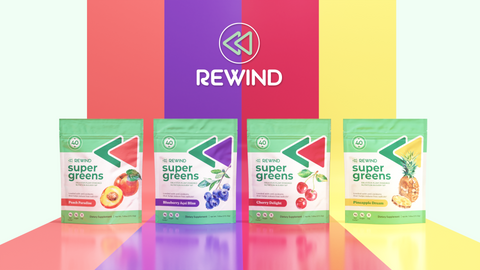
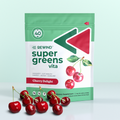
Cherry Delight
$39.99

Pineapple Dream
$39.99
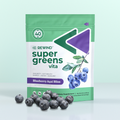
Blueberry Acai Bliss
$39.99


