

Anxiety is one of the most common mental health experiences in modern life. Whether it takes the form of generalized background worry, specific situational nervousness, the social anxiety of professional environments, or the physical tension and cognitive intrusion that comes with a demanding schedule, anxious states are experienced by a large proportion of adults as a regular feature of their daily lives rather than an exceptional response to exceptional circumstances.
Conversations about anxiety typically focus on therapeutic, behavioral, and pharmacological interventions. These are important and, in many cases, essential. But there is a nutritional dimension to anxiety that receives far less attention: the specific micronutrients and plant compounds that influence the biological systems governing stress reactivity, nervous system regulation, and the neurotransmitter balance that anxiety states disrupt. A daily greens drink does not treat anxiety disorders and is not a substitute for professional support when that is needed. But it does address the nutritional substrate of the nervous system in ways that are increasingly well-documented in research and that matter for the everyday anxiety experiences that most people manage without clinical intervention.
Anxiety involves the activation of the threat-detection system centered on the amygdala, which triggers the hypothalamic-pituitary-adrenal axis to release cortisol and the sympathetic nervous system to release adrenaline. This produces the characteristic physical sensations of anxiety: elevated heart rate, muscle tension, heightened vigilance, impaired digestion, and altered thinking that prioritizes threat-scanning over calm, focused analysis. In appropriate doses, this response is adaptive and protective. In excessive or chronic form, it becomes the experience most people describe as anxiety.
The ability of the nervous system to regulate this threat response, to activate it appropriately and then return to calm baseline, depends on the neurochemistry of inhibitory neurotransmission. GABA is the primary inhibitory neurotransmitter of the central nervous system, and its activity is what counters the excitatory signals of the stress response. Serotonin modulates mood, emotional regulation, and the cognitive aspects of anxiety. Dopamine governs motivation and the reward signals that counterbalance threat-focused states. All of these neurotransmitter systems depend on nutritional cofactors for their synthesis, and all are influenced by the nutritional status of the person experiencing the anxious state.
The relationship between magnesium and anxiety is bidirectional and well-documented in research. Magnesium is a required cofactor for GABA receptor function, the inhibitory neurotransmitter system that calms nervous system activity. It blocks NMDA glutamate receptors, reducing the excitatory neuronal activity that underlies hypervigilance and anxious rumination. And it is required for the ATP energy production that neurons need to maintain their normal, regulated function rather than cycling into the hyperactivated states associated with anxiety.
Chronic stress, which is both a cause and consequence of anxiety, significantly increases renal magnesium excretion, creating a vicious circle: stress depletes magnesium, low magnesium worsens stress reactivity, worsened stress reactivity depletes more magnesium. Research has documented that individuals with anxiety disorders have measurably lower magnesium status than non-anxious controls, and clinical trials of magnesium supplementation in stressed adults have found significant reductions in anxiety scale scores compared to placebo. The magnesium from Barley Grass Powder and Wheatgrass Powder in a daily greens drink provides consistent daily food-matrix magnesium that helps interrupt this depletion cycle.
Research has specifically examined the combination of magnesium with Vitamin B6 for anxiety and stress, with findings suggesting the combination may be more effective than magnesium alone in people with low magnesium status and high stress. Vitamin B6 is required for the synthesis of GABA from glutamate by the enzyme glutamate decarboxylase, meaning that B6 contributes to the inhibitory neurotransmitter side of the anxiety regulation equation. When both magnesium (which activates GABA receptors) and B6 (which supports GABA production) are adequate, the inhibitory neurotransmitter system operates most effectively as a counterweight to anxious activation.
Spirulina provides B6 alongside the broader B-vitamin complex that supports neurotransmitter synthesis pathways including serotonin and dopamine production. The combination of Spirulina's B vitamins with Barley Grass and Wheatgrass magnesium in a greens formula creates the nutritional environment in which these complementary calming mechanisms can operate at their best.
The gut-brain axis, the bidirectional communication network connecting the enteric nervous system and central nervous system through neural, endocrine, and immune pathways, has established the gut microbiome as a significant modulator of anxiety and emotional regulation. Approximately 95 percent of the body's serotonin is produced in the gut, with gut bacteria playing a direct role in regulating its production. Gut bacteria also produce GABA, short-chain fatty acids that influence blood-brain barrier integrity, and regulatory signals that modulate the HPA axis stress response.
When the gut microbiome is disrupted by poor diet, stress, or antibiotic use, the gut-brain signaling that supports emotional regulation is correspondingly disrupted. Research has found consistent associations between gut microbiome dysbiosis and anxiety disorders, and probiotic and dietary interventions that improve gut microbiome health have shown benefits for anxiety measures in multiple clinical studies. The plant compounds in a daily greens formula, including the polyphenols metabolized by beneficial gut bacteria and the phytonutrients that support gut barrier integrity, contribute to the gut microbiome environment that supports healthy gut-brain anxiety regulation.
The distinction between adaptogens and sedatives is important for understanding their anxiety-relevant benefit. Adaptogens do not produce sedation or directly suppress anxiety in the way that anxiolytic medications do. What they do is gradually recalibrate the HPA axis to produce a more proportionate, more quickly resolving stress response to triggers that previously produced outsized anxious reactions. Over weeks of consistent daily use, the person taking Siberian Ginseng and Astragalus Root as daily adaptogens experiences the same stressors as before but with a nervous system that returns to baseline more efficiently, with less residual activation, and with a higher threshold before the full anxiety response engages.
This adaptive, normalizing effect is distinct from acute anxiety relief and requires the same patience that all adaptogenic benefits demand: weeks of consistent daily use before the recalibration becomes functionally apparent. For people managing everyday stress and situational anxiety rather than anxiety disorders requiring clinical intervention, this gradual building of genuine stress resilience represents a meaningfully different approach than symptom management, and one that compounds positively over months of consistent daily greens use.
Green Tea Extract provides caffeine alongside EGCG catechins, and this combination has a well-documented effect on alertness that is qualitatively different from coffee's pure caffeine delivery. The EGCG catechins slow caffeine absorption and modulate its CNS effects, producing a steadier, calmer alertness that many people find less anxiety-provoking than the acute caffeine spike of coffee. Green tea also contains L-theanine in the whole leaf form, an amino acid that promotes alpha-wave brain activity associated with relaxed alertness and that has documented anxiety-reducing effects in research when consumed alongside caffeine.
For people whose caffeine consumption from coffee contributes to their anxiety through excessive stimulation, the Green Tea Extract in a greens drink provides a more moderate, more GABA-activating caffeine delivery that supports cognitive function without the anxiogenic edge that high-dose coffee often produces.
The physical sensations of low blood glucose, including shakiness, heart palpitations, irritability, difficulty concentrating, and a sense of internal agitation, are easily mistaken for or can amplify true anxious states. People who skip breakfast, eat high-sugar meals that produce rapid glucose rises and subsequent crashes, or go extended periods without eating frequently experience blood glucose-driven anxiety amplification throughout the day. The crash from a high-glycemic breakfast that was eaten hours ago can produce genuine physical anxiety symptoms in the early afternoon that are nutritional in origin rather than psychological.
The Green Tea Extract in a greens drink has documented modest benefits for glucose metabolism, and the consistent daily micronutrient support from a greens formula improves the overall metabolic efficiency that underlies blood glucose stability. Taking greens as part of a protein-containing morning breakfast creates the most stable blood glucose starting point for the day, reducing the glucose-driven anxiety amplification that an inadequate breakfast reliably produces.
The nutritional basis of anxiety regulation through magnesium, B vitamins, gut-brain axis modulation, and adaptogenic support is increasingly well-documented in clinical research.
Anxiety has a nutritional dimension that most people never address because most anxiety conversations focus entirely on the psychological and behavioral dimensions. The magnesium that GABA receptors need to function. The B vitamins that produce serotonin and GABA. The gut microbiome health that regulates the gut-brain serotonin axis. The adaptogenic support that recalibrates the HPA axis to respond proportionately to stressors rather than reactively. The blood glucose stability that prevents nutritional anxiety amplification throughout the day.
A daily greens drink addresses all of these nutritional dimensions of anxiety regulation simultaneously, not as a treatment for anxiety disorders but as the daily nutritional maintenance of the biological systems that regulate stress and calm. It does not replace therapy, medication, or the behavioral and lifestyle practices that anxiety management requires. But it nourishes the substrate on which all of those interventions operate. A nervous system with adequate magnesium, B vitamins, gut microbiome support, and adaptogenic calibration handles anxiety better than one that is nutritionally depleted. Start with the nutritional foundation. Build everything else on top.
No. A greens drink is a nutritional supplement that may support the biological systems involved in stress regulation. It is not a treatment for anxiety disorders and should never replace prescribed medication or professional mental health care. Anyone experiencing significant anxiety that interferes with daily functioning should seek evaluation and support from a qualified healthcare provider. Nutritional support works best as a complement to evidence-based anxiety management rather than a substitute for it.
Research on magnesium supplementation and anxiety typically shows improvements emerging over four to eight weeks of consistent daily intake, with the greatest effects in people who have low baseline magnesium status. The effects are not acute in the way anxiolytic medications are, but build gradually as magnesium levels restore and the GABA receptor and NMDA inhibitory systems that magnesium supports begin operating more effectively. Consistency over weeks matters far more than any single dose.
High caffeine intake from coffee or energy drinks can worsen anxiety in people who are caffeine-sensitive or who consume caffeine in excess. The Green Tea Extract in a greens drink provides moderate caffeine alongside EGCG catechins that buffer and extend its effect, producing steadier alertness with less of the anxiogenic spike that high-dose coffee can create. For people who notice that coffee worsens their anxiety, reducing coffee consumption while maintaining the greens drink as their primary caffeine source may be worth exploring.
Magnesium from Barley Grass and Wheatgrass supports GABA receptor function and NMDA inhibition. Spirulina B vitamins support GABA and serotonin synthesis. Siberian Ginseng and Astragalus Root provide adaptogenic HPA axis recalibration over weeks of consistent use. Green Tea Extract provides calm alertness rather than anxiogenic stimulation. And the gut microbiome-supporting plant compounds in the formula maintain the gut-brain serotonin axis that is the foundation of baseline mood and anxiety regulation. These mechanisms are complementary and work best together.
Research documents consistent associations between poor dietary quality, particularly high intake of ultra-processed foods and low intake of plant foods, and higher rates of anxiety and depression. A greens drink provides the plant-derived micronutrients and polyphenols most likely to be deficient in a poor-quality diet, but it cannot compensate for a dietary pattern that is highly processed and low in whole foods across the board. The greens drink works best as part of an overall nutritional approach that prioritizes dietary quality, not as a single solution to a broadly inadequate diet.
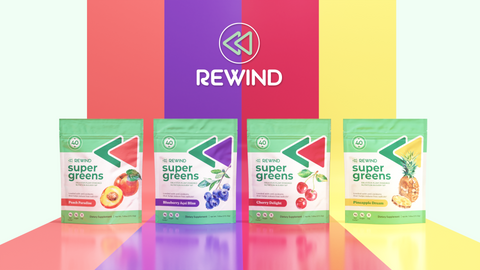
Cherry Delight
$39.99

Pineapple Dream
$39.99
Blueberry Acai Bliss
$39.99


