

If you look at the ingredient label of a well-made super greens powder, Spirulina is almost certainly near the top of the list. And there is a very good reason for that. Spirulina is not a trendy new ingredient or a wellness fad. It is one of the most studied nutritional supplements on earth, with a research history stretching back decades and a nutritional profile so dense that NASA once studied it as a potential food source for long-duration space missions. That is not a marketing language. That is what peer-reviewed science has found when researchers put Spirulina under the microscope.
Despite its scientific pedigree, Spirulina is often misunderstood by the people taking it. Many people know it as the thing that turns their greens drink a deep green or blue-green color, but have little idea of why it is in the formula or what it is actually doing in their body. This blog fills that gap. We are going to look at what Spirulina actually is, what its exceptional nutritional profile means for your daily health, and why it is the foundational ingredient in any serious greens powder drink.
Spirulina is a cyanobacterium, which is a type of photosynthetic microorganism that lives in both fresh and salt water. Despite being classified as a bacterium rather than a plant, Spirulina produces energy through photosynthesis just as plants do, using sunlight to convert carbon dioxide and water into nutrients. It is often called a blue-green algae, which is a common name that accurately describes its appearance if not its strict biological classification.
Spirulina has been consumed by humans for far longer than most supplements have existed. The Aztecs harvested it from Lake Texcoco in Central Mexico and used it as a regular food source. Populations in Chad, Africa, have dried and eaten Spirulina from local alkaline lakes for centuries. Modern nutritional science has now explained why these traditional food cultures independently identified Spirulina as a valuable food: it is one of the most nutritionally complete single-ingredient foods ever analyzed, with a protein content, mineral density, and phytonutrient profile that is genuinely extraordinary for something that grows as a microscopic organism in water.
The deep blue-green color of Spirulina comes from two pigments: chlorophyll, which is responsible for the green, and phycocyanin, which produces the distinctive blue. Phycocyanin is not just a pigment. It is a powerful antioxidant and anti-inflammatory protein that is found almost exclusively in blue-green algae and is one of the most bioactive compounds in the entire Spirulina nutritional profile. When your greens powder drink takes on a noticeably green tint, that color is largely evidence of the Spirulina and its phycocyanin content doing exactly what they are supposed to do.
The reason Spirulina sits at the heart of most serious greens powder formulations is not any single benefit. It is the sheer density and breadth of its nutritional profile. Gram for gram, very few foods on earth offer what Spirulina provides.
Spirulina is approximately 60 to 70 percent protein by dry weight, making it one of the highest protein-density foods in existence. More significantly, it is a complete protein, meaning it contains all nine essential amino acids that the body cannot synthesize on its own. For a plant-based food source, this is unusual. Most plant proteins are incomplete, requiring careful combining of different foods to cover all essential amino acids. Spirulina covers them all in a single ingredient. The protein in Spirulina is also highly digestible, with some studies suggesting digestibility rates comparable to egg protein, which is typically used as the gold standard for protein bioavailability.
Spirulina is one of the richest plant-based sources of iron available. Iron deficiency is the most common nutritional deficiency worldwide, affecting not just those with diagnosed anemia but a much larger population of people with subclinical low iron who experience fatigue, poor concentration, reduced exercise tolerance, and compromised immune function without ever connecting these symptoms to their iron status. The iron in Spirulina is non-heme iron, which is typically less bioavailable than heme iron from animal sources, but Spirulina's companion nutrients, particularly its Vitamin C precursors and the Acerola Extract present in a comprehensive greens formula, significantly enhance its absorption. For people eating a primarily plant-based diet, Spirulina in a daily greens drink is one of the most practical ways to consistently support iron levels.
Spirulina is rich in B vitamins, particularly B1 (thiamine), B2 (riboflavin), and B3 (niacin). These vitamins are central to the metabolic pathways that convert food into ATP, the energy currency your cells actually run on. They are also involved in nerve function, red blood cell production, and DNA repair. Unlike the megadose B vitamins found in many synthetic supplements, the B vitamins in Spirulina come in their natural food-matrix form, which is generally better tolerated and more efficiently utilized by the body.
Spirulina's mineral profile extends well beyond iron. It is a meaningful source of magnesium, potassium, calcium, and a broad spectrum of trace minerals including zinc, manganese, and copper. As discussed in the hydration blog, these minerals are essential for fluid balance, enzyme function, nerve signaling, and muscle contraction. In a greens powder drink designed to support overall daily nutrition, Spirulina provides a mineral backbone that supports dozens of physiological functions simultaneously.
While Spirulina's protein, iron, and vitamin content are impressive, phycocyanin may be its most distinctive and medically interesting compound. This blue pigment protein is found in significant concentrations only in blue-green algae and has attracted substantial scientific interest for its antioxidant and anti-inflammatory properties.
Phycocyanin's antioxidant activity is extraordinary in several respects. It is a potent scavenger of hydroxyl radicals and peroxyl radicals, two of the most damaging types of free radicals in biological systems. Its antioxidant capacity per gram rivals and in some measures exceeds that of well-known antioxidants including Vitamin C and Vitamin E. In the context of a greens drink mix with multiple antioxidant ingredients, phycocyanin from Spirulina adds a layer of free radical protection that complements rather than duplicates what the other antioxidant ingredients provide.
Phycocyanin has been shown in multiple studies to inhibit the production of inflammatory signaling molecules, particularly by blocking a pathway called cyclooxygenase-2, which is the same pathway targeted by common anti-inflammatory medications. This gives Spirulina a genuine and measurable anti-inflammatory effect that goes beyond simple antioxidant protection. For people dealing with chronic low-grade inflammation, from diet, stress, environmental exposures, or overtraining, the consistent daily anti-inflammatory input from Spirulina in a greens powder drink may contribute meaningfully to a lower overall inflammatory load over time.
The immune-supporting properties of Spirulina have been studied extensively, and the evidence is encouraging across several mechanisms.
Natural killer cells are a type of immune cell that targets and destroys virus-infected cells and cancer cells without needing prior exposure to a specific pathogen. Spirulina supplementation has been shown in human clinical studies to increase natural killer cell activity, suggesting a meaningful enhancement of innate immune function. This is the branch of the immune system that provides the first line of defense against new infections, making it particularly relevant during summer travel, when exposure to unfamiliar pathogens is higher than usual.
A significant portion of immune function is located in the gut, where specialized immune cells monitor the intestinal lining for pathogen entry. Spirulina's combination of protein, prebiotic-adjacent polysaccharides, and anti-inflammatory compounds has been shown to support the integrity of this gut-associated immune system, contributing to a more robust first-line defense against the everyday microbial challenges your body encounters.
Spirulina is frequently mentioned in the context of detoxification, and while some of the more dramatic claims about detox go well beyond what the evidence supports, Spirulina does have legitimate, evidence-based detox-supportive properties.
Spirulina has been studied for its ability to bind to and facilitate the elimination of heavy metals and environmental toxins from the body. The chlorophyll content in Spirulina supports liver function by promoting bile flow, which is one of the primary routes through which fat-soluble toxins are eliminated. In a greens powder with Milk Thistle Seed Powder, Barley Grass, and Wheatgrass also present, Spirulina works as part of a coordinated liver and detox support system rather than in isolation.
Spirulina has one of the most substantial research profiles of any ingredient in the greens supplement category.
Spirulina earned its reputation. Not because of clever marketing, but because when researchers looked closely at what it contains and what those compounds do in the body, the results were consistently impressive across study after study. Complete plant protein. Highly bioavailable iron. B vitamins for cellular energy. A mineral profile that supports dozens of physiological functions. Phycocyanin with antioxidant and anti-inflammatory power. Immune-modulating polysaccharides. Chlorophyll for liver and detox support.
When you mix your healthy greens drink every morning, Spirulina is doing more work in that scoop than almost any other ingredient in the formula. It is not a supporting character. It is the foundation on which everything else is built. Understanding that makes it easier to be consistent, because you know that the green color in your glass is not just aesthetics. It is evidence of something genuinely valuable going to work for your health.
Pure Spirulina powder does have a strong earthy, algae-like flavor that some people find unpleasant on its own. In a well-formulated greens drink with fruit-based flavoring ingredients, the Spirulina flavor is balanced and most people find the overall taste genuinely enjoyable rather than grass-like or medicinal.
Spirulina has an excellent safety profile and has been consumed as a daily food source in various cultures for centuries, with modern clinical trials consistently confirming its tolerability at typical supplement doses. People with phenylketonuria, a rare metabolic disorder, should avoid Spirulina as it contains the amino acid phenylalanine; others should consult their healthcare provider if taking blood thinners.
Yes, through several mechanisms. Spirulina's iron content supports oxygen delivery to cells and muscles, its B vitamins support the metabolic pathways that convert food into energy, and its anti-inflammatory properties reduce the low-grade inflammatory burden that is one of the most common and underappreciated drivers of chronic fatigue. The effects build over several weeks of daily consistent use.
Phycocyanin is the blue pigment protein in Spirulina that is responsible for its distinctive color and is one of its most bioactive compounds. It is a potent antioxidant and anti-inflammatory agent found almost exclusively in blue-green algae, and its presence in a greens formula adds a layer of free radical protection and anti-inflammatory activity that most other plant foods simply cannot provide.
Yes, Spirulina is one of the few plant foods that provides all nine essential amino acids, making it a complete protein by nutritional standards. While the protein quantity per serving of a greens powder is not comparable to a dedicated protein supplement, the complete amino acid profile of Spirulina contributes meaningfully to daily protein diversity when consumed consistently.
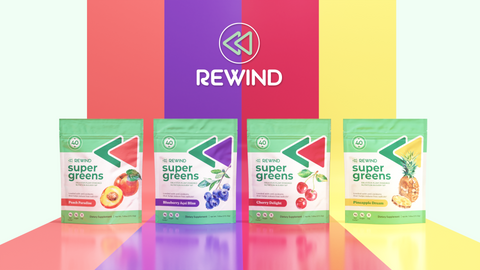
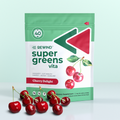
Cherry Delight
$39.99
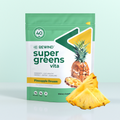
Pineapple Dream
$39.99
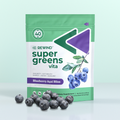
Blueberry Acai Bliss
$39.99


