

Everyone who spends time in the sun reaches for sunscreen. And that is the right instinct. Topical sun protection is an important and well-proven tool for reducing UV damage at the surface of the skin. But sunscreen only addresses part of the picture. It creates a barrier that reduces the amount of UV radiation reaching your skin cells, but it does not address what happens at the cellular level when UV radiation does get through. And some always do. Even well-applied sunscreen does not block 100 percent of UV exposure. The oxidative stress, free radical damage, collagen degradation, and inflammatory responses that UV radiation triggers in skin cells continue to happen beneath the surface, in the places a topical product cannot reach.
This is where nutrition enters the picture. A growing body of research has established that certain plant-based nutrients, taken internally and consistently, can support the skin's own defense mechanisms against UV-induced damage. They do not replace sunscreen. They work alongside it, addressing the cellular layer of sun protection that topical products simply cannot access. A daily super greens powder rich in specific antioxidants, carotenoids, and plant polyphenols provides exactly the kind of inside-out skin support that the research points to. This blog breaks down which nutrients in a healthy greens drink are doing the most work for your skin in summer, and how they work together to support healthier skin from the cellular level up.
To understand how nutrition helps, it helps to understand what UV radiation actually does when it hits your skin at the cellular level. This is not just about sunburn, which is the visible surface result of acute overexposure. It is about what is happening in skin cells every single day, even on cloudy days, even through glass, even from reflected light off water and sand.
When UV photons hit skin cells, they excite electrons in cellular molecules, generating reactive oxygen species, which are essentially unstable molecules that want to steal electrons from neighboring molecules. This sets off a chain reaction of molecular damage called oxidative stress. The targets of this cascade include the DNA in skin cells, the collagen and elastin proteins that give skin its firmness and elasticity, and the cell membranes that maintain cellular integrity. Each of these damage events is small, but they accumulate every day over years of sun exposure, manifesting eventually as fine lines, loss of firmness, uneven pigmentation, and changes in skin texture.
UV radiation activates enzymes in the skin called matrix metalloproteinases, which break down collagen and elastin. These enzymes are part of the skin's normal repair response, but UV radiation triggers them in excess, causing net collagen degradation over time. The visible result is what people call photoaging: the wrinkles, sagging, and loss of skin plumpness that come from long-term sun exposure rather than chronological aging alone. Nutritional strategies that either reduce the free radical trigger for these enzymes or directly support collagen synthesis can slow this process meaningfully over time.
Lutein is one of the most important and least discussed nutrients in the skin protection conversation. It is a carotenoid, a pigment molecule from the same family as beta-carotene, and it has a unique property that sets it apart from most other antioxidants: it physically accumulates in tissues that experience high oxidative stress from light exposure, specifically the retina of the eye and the skin.
When you consume Lutein consistently through food or a greens powder drink, it is absorbed into the bloodstream and selectively deposited in the skin's outer layers, particularly the dermis and epidermis where UV penetration is greatest. Once there, it acts as a natural light filter and antioxidant, absorbing some UV radiation before it can trigger free radical reactions and neutralizing the reactive oxygen species that do form. This dual action, both filtering and scavenging, makes Lutein one of the most functionally relevant nutrients for sun-exposed skin.
An increasingly relevant aspect of Lutein's protective role extends beyond UV to blue light, the high-energy visible light emitted by digital screens and LED lighting. Blue light has been shown to generate oxidative stress in skin cells through mechanisms similar to UV radiation. For people spending significant time on screens during the work day, Lutein's capacity to filter high-energy visible light makes it doubly relevant, protecting not just sun-exposed skin but also the skin of the face that is exposed to screen light daily.
Resveratrol and Grapeseed Extract are two of the most researched polyphenolic compounds in the context of skin aging and photoprotection, and both are present in a comprehensive greens formula.
Resveratrol is a stilbene polyphenol found in grape skins, berries, and other plant foods, and its effects on skin health go beyond simple antioxidant activity. Resveratrol activates a class of proteins called sirtuins, which are involved in DNA repair, cellular stress response, and the regulation of inflammatory pathways. In the skin specifically, sirtuin activation helps skin cells respond more effectively to UV-induced DNA damage, activating repair mechanisms rather than allowing damaged cells to accumulate. This is a more active form of protection than simple antioxidant neutralization, making Resveratrol one of the most functionally sophisticated skin-supportive ingredients in the greens powder category.
Grapeseed Extract is exceptionally rich in oligomeric proanthocyanidins, a class of flavonoids with particularly strong affinity for collagen and elastin. These compounds bind to collagen fibers and protect them from the degrading enzymes activated by UV radiation. Multiple studies have shown that oligomeric proanthocyanidins from grapeseed reduce collagen breakdown, support microcirculation in the skin's dermal layer, and reduce inflammatory markers associated with photoaging. In practical terms, consistent daily intake through a greens drink mix may support better skin firmness and elasticity over the summer months when collagen degradation from UV is at its peak.
One of the most important concepts in nutritional skin health is that antioxidants work as a network, not as isolated compounds. Different antioxidants neutralize different types of free radicals, operate in different cellular compartments, and regenerate each other after use. A comprehensive greens formula with multiple antioxidant ingredients creates a layered defense system that is substantially more effective than any single high-dose antioxidant taken in isolation.
Blueberry Powder and Bilberry Fruit Extract both contribute anthocyanins, the dark pigment flavonoids that give these berries their characteristic color. Anthocyanins are water-soluble antioxidants that operate in the aqueous cellular environment, neutralizing free radicals in the cellular fluid where fat-soluble antioxidants cannot reach. They also support microcirculation, which delivers oxygen and nutrients to skin cells and removes metabolic waste products. For summer skin health specifically, the combination of anthocyanin-driven antioxidant protection and microcirculation support translates to better cellular oxygenation and faster clearance of the oxidative byproducts that UV radiation generates.
Acerola Extract, explored in detail in an earlier blog, provides food-matrix Vitamin C that serves as both a direct antioxidant in the aqueous skin environment and a cofactor for collagen synthesis. In the context of summer skin support, its role as a collagen production enabler is particularly relevant: while UV radiation is actively degrading collagen through enzyme activation, Vitamin C is helping maintain the synthesis side of the collagen balance. Vitamin C also recycles spent Vitamin E molecules back to their active antioxidant form, which means its presence in the formula amplifies the effectiveness of every fat-soluble antioxidant present alongside it.
Spirulina's rich chlorophyll content has been associated with support for skin cell turnover and detoxification. Chlorophyll structurally resembles hemoglobin and supports cellular oxygenation at the tissue level. Some research has explored topical chlorophyll for skin benefits, but daily consumption through a greens drink contributes systemic chlorophyll levels that support the cellular environment in which skin renewal occurs. For summer skin that is dealing with the combined stress of UV exposure, heat, and increased activity, having Spirulina as part of the daily nutritional foundation supports the skin's ability to renew and repair itself rather than simply accumulating damage.
To be completely clear: nothing in a greens powder replaces the SPF protection of a topical sunscreen. Sunscreen blocks UV radiation at the surface. Nutritional antioxidants work at the cellular level. These are different mechanisms addressing different aspects of sun protection, and the most complete summer skin strategy uses both.
The practical implication is straightforward. Apply sunscreen before significant sun exposure. Take your greens drink every morning. The sunscreen handles the surface; the nutrition handles the cellular environment beneath it. Over a summer of consistent daily practice, this combination supports skin that is more resilient to the oxidative and structural damage that makes sustained sun exposure age the skin so visibly over time.
The relationship between dietary antioxidants and skin photoprotection is an active area of dermatological nutrition research, with a growing body of clinical evidence supporting the benefits discussed in this blog.
Skin protection in summer is a two-layer job. The layer most people focus on is topical: sunscreen, protective clothing, shade-seeking. The layer most people ignore is nutritional: the cellular antioxidant environment that determines how much damage UV radiation actually causes in the skin cells that sunscreen does not completely shield. A daily greens drink provides the nutritional layer through a combination of ingredients that are specifically relevant to summer skin: Lutein for physical light filtration and carotenoid protection, Resveratrol for sirtuin-mediated DNA repair support, Grapeseed Extract for collagen structural defense, Acerola Extract for Vitamin C-driven collagen synthesis and antioxidant recycling, and Blueberry and Bilberry anthocyanins for cellular aqueous antioxidant protection.
None of these replace sunscreen. All of them support what sunscreen cannot do. Together, they represent the complete approach to summer skin health that the research supports: protection from the outside, nourishment from within, and consistency through the whole season.
No. Topical sunscreen and nutritional antioxidants work through completely different mechanisms and are not interchangeable. Sunscreen blocks UV radiation at the surface; nutritional antioxidants address oxidative stress inside skin cells. Using both together provides more complete protection than either approach alone.
Carotenoids like Lutein begin accumulating in skin tissue within two to four weeks of consistent daily intake, with measurable increases in skin antioxidant capacity typically detectable after four to eight weeks of regular supplementation. This is why starting a daily greens habit before summer sun exposure peaks gives the best protective foundation.
Lutein, Resveratrol, Grapeseed Extract, Acerola Extract, Blueberry Powder, and Bilberry Fruit Extract are the ingredients most directly supported by research on dietary photoprotection and skin antioxidant defense. A comprehensive greens formula with all of these present delivers a broad-spectrum skin support that a single-ingredient approach cannot match.
The anti-inflammatory compounds in a greens powder, including quercetin, anthocyanins, resveratrol, and green tea catechins, may help reduce the inflammatory response in skin following sun exposure. Taking your greens drink consistently rather than just after sun exposure builds the anti-inflammatory baseline that is most protective over time.
Vitamin C from Acerola Extract has well-documented effects on tyrosinase inhibition, the enzyme responsible for melanin production that causes dark spots and uneven tone. Consistent daily intake over several weeks as part of a sun-smart routine may support a more even complexion, though visible results from internal supplementation take longer than topical Vitamin C treatments.
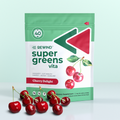
Cherry Delight
$39.99
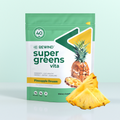
Pineapple Dream
$39.99
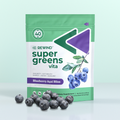
Blueberry Acai Bliss
$39.99


