

You pick up a box of crackers at the store. The front says "Made with Whole Grains" and "All Natural." Sounds healthy, right? Then you flip it over and see a panel full of numbers, percentages, and words you are not sure how to use. So you put it in your cart and move on. Most of us have done this a hundred times.
The Nutrition Facts label is one of the most useful tools in the grocery store. It tells you exactly what is inside a food, without the marketing spin. Research shows that people who read food labels tend to eat healthier overall. The good news is that you do not need to understand every number. This guide walks you through the label step by step, in plain language, so you can make smart choices in just a few seconds.
Studies suggest they do. A review of research on adults found that reading the Nutrition Facts label was linked with healthier diets. Another large analysis of 60 studies found that food labeling helped people eat fewer calories and less fat, and eat more vegetables. In one study in Italy, people who read food labels were much more likely to follow a Mediterranean-style eating pattern, which is rich in vegetables, fruits, whole grains, beans, fish, and olive oil.
Labels give you power. Once you know how to read them, you can compare two foods side by side, spot hidden sugar and salt, and choose the option that fits your goals.
Almost all packaged foods in the United States have a Nutrition Facts label, usually on the back or side of the package. Fresh fruits, vegetables, and raw meats often do not have one, because they are whole foods. Many dietary supplements, including many greens powders, use a slightly different label called Supplement Facts. We will cover that later.
Everything else on the label is based on the serving size listed at the top. If the serving size is one cup and you eat two cups, you need to double every number on the label. This is where many people get tripped up. A small bag of chips or a bottle of juice might look like one serving but actually contain two or more.
Right above or below the serving size, you will see how many servings are in the whole package. If a bag has 3 servings and you eat the whole bag, you are eating 3 times the calories, sugar, and salt shown on the label. Always check both numbers before you do anything else.
Calories tell you how much energy a serving of food gives you. Most adults need somewhere around 1,600 to 3,000 calories a day, depending on their age, size, sex, and how active they are. The label uses 2,000 calories a day as a general guide. Calories are not good or bad on their own. A handful of nuts and a candy bar might have similar calories, but the nuts bring protein, fiber, and healthy fats, while the candy bar mostly brings sugar. That is why it is important to look beyond calories.
On the right side of the label, you will see a column of percentages called the Percent Daily Value, or %DV. It tells you how much one serving adds toward your total daily needs for each nutrient, based on a 2,000-calorie day. It is one of the easiest tools on the label once you know a simple rule.
Here it is: 5 percent or less is low. 20 percent or more is high. That is all you need to remember. Use it to pick foods that are high in the nutrients you want more of and low in the ones you want less of. For example, if a cereal has 25 percent of the Daily Value for fiber, that is high, and that is a good thing. If a soup has 35 percent of the Daily Value for sodium, that is high, and that is something to watch.
Three nutrients are worth keeping an eye on: saturated fat, sodium, and added sugars. Eating too much of these over time is linked to heart problems, high blood pressure, and other health issues. Try to choose foods that are lower in these, using the 5 and 20 rule. Trans fat should be as close to zero as possible.
The label lists Total Sugars, and right underneath it, Includes Added Sugars. Total sugars include natural sugars, like the sugar found in fruit and milk. Added sugars are sugars put in during processing, like table sugar, honey, or syrups. Added sugars are the ones to watch. Here is a handy trick: about 4 grams of sugar equals 1 teaspoon. So a drink with 40 grams of added sugar has about 10 teaspoons of sugar in it.
Look for foods that are higher in fiber, vitamin D, calcium, iron, and potassium. Many Americans do not get enough of these. Fiber helps you feel full and supports healthy digestion. Calcium and vitamin D help keep bones strong. Iron helps carry oxygen in your blood. Potassium helps your heart and muscles work. Protein is also listed, and including some at each meal helps keep you satisfied.
The ingredients list shows everything in the food, in order from most to least by weight. The first few ingredients make up most of the product. If sugar or white flour is listed first, that tells you a lot. If a whole food, like whole oats or beans, is first, that is a good sign. In general, shorter ingredient lists with words you recognize are a good place to start.
Sugar can hide behind many names. Watch for corn syrup, high-fructose corn syrup, cane sugar, brown sugar, honey, agave, molasses, maltose, dextrose, sucrose, fruit juice concentrate, and anything ending in "syrup." If you see several of these in one ingredients list, the food likely has a lot of added sugar, even if no single sugar is listed first.
The front of the box is marketing. Words like "natural," "made with whole grains," "multigrain," "lightly sweetened," and "low fat" can make a food sound healthier than it really is. A cereal made with some whole grains might still be loaded with sugar. A low-fat snack might make up for the missing fat with extra sugar or salt. Always flip the package over and check the Nutrition Facts label and ingredients list before deciding.
Many greens powders use a Supplement Facts label instead of a Nutrition Facts label. Look for a clear, complete ingredient list so you know exactly which plants are inside, such as Spirulina, Spinach Leaf Powder, Acerola Extract, or Blueberry Powder. Be cautious of products that hide most of their ingredients inside a vague blend with no details. Check for added sugars, and look for products that are tested by a third party for quality.
You do not need to study every label. Use this quick check: Look at the serving size. Glance at the calories. Use the 5 and 20 rule on saturated fat, sodium, and added sugars. Check that fiber is decent. Peek at the first three ingredients. With a little practice, this takes about 10 seconds per item.
Pick up both packages and compare the same nutrients side by side. Make sure the serving sizes are similar, or do a little math to even them out. Choose the one with less added sugar, sodium, and saturated fat, and more fiber and protein. Small swaps, like choosing a cereal with 3 grams of added sugar instead of 15, add up over weeks and months.
Systematic reviews and observational studies have examined associations between food label use, consumer dietary behavior, and diet quality.
The Nutrition Facts label is your best friend at the grocery store. It cuts through the marketing and tells you what is really inside your food. Start with the serving size. Glance at calories. Use the 5 and 20 rule to limit saturated fat, sodium, and added sugars, and to find foods higher in fiber, calcium, iron, vitamin D, and potassium. Then check the first few ingredients and watch for hidden sugars.
Research shows that people who read labels tend to eat better overall. With a little practice, label reading takes just seconds. Combine smart shopping with plenty of whole foods, like fruits, vegetables, beans, and whole grains, plus your daily greens drink, and you will be building a healthier diet one choice at a time.
Not always. A food can have no sugar and still be high in sodium, saturated fat, or calories, or low in fiber and nutrients. Look at the whole label, not just one number. Also check for artificial sweeteners in the ingredients list if you prefer to avoid them.
The 2,000-calorie number is a general guide that makes it easy to compare foods. Your own needs may be higher or lower. The 5 and 20 rule still works well for spotting foods that are high or low in a nutrient, no matter how many calories you eat.
Not necessarily. Some healthy foods, like a multigrain bread or a spice blend, have long lists of good ingredients. Focus on what the ingredients are, not just how many there are. Whole foods listed first are a good sign.
Fresh produce is usually sold loose, so it does not have a printed label. But fruits and vegetables are some of the healthiest foods you can eat. You can find nutrition information for them online if you are curious. In general, a wide variety of colorful produce is always a smart choice.
Many greens powders have a Supplement Facts label. Check the serving size, look for a complete list of every ingredient, and see if there are any added sugars. A clear, specific ingredient list is a good sign that you know exactly what you are getting.
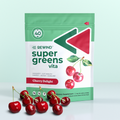
Cherry Delight
$39.99
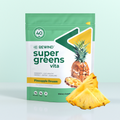
Pineapple Dream
$39.99
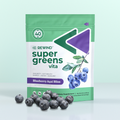
Blueberry Acai Bliss
$39.99


