

Stress is not just a mental or emotional experience. It is a whole-body physiological event that burns through specific nutrients at a rate your normal diet is rarely designed to replenish. Most conversations about stress focus on managing it through sleep, exercise, meditation, and therapy. All of that is valid and important. But there is a nutritional dimension to chronic stress that almost nobody talks about, and it may be the hidden reason so many people feel worse and worse the longer their stressful period lasts. Your body does not just struggle through stress on the same nutritional reserves it normally uses. It actively depletes them, and if those reserves are not replenished consistently, the physiological consequences compound over time.
Understanding which nutrients stress burns through, and why, changes how you think about daily nutrition under pressure. This blog explains the specific mechanisms by which chronic stress depletes key vitamins and minerals, what that depletion costs you in terms of how you feel and function, and how a daily greens powder routine may support your body's nutritional reserves precisely when stress is demanding the most from them.
When your body perceives a threat, whether real or psychological, it activates the hypothalamic-pituitary-adrenal axis, the system that orchestrates the physiological stress response. The adrenal glands release cortisol and adrenaline, blood flow is redirected, heart rate increases, digestion slows, and every available resource is mobilized to deal with the perceived threat. This system is extraordinarily effective for short, acute stressors. A near-miss in traffic, a work deadline, an argument. The problem is that it was not designed to run continuously.
When stress becomes chronic, the HPA axis stays activated at a low but constant level. The adrenal glands keep producing cortisol. The body keeps mobilizing resources. And because this process is metabolically expensive, it consumes specific nutrients at rates that normal dietary intake struggles to keep pace with. The longer the stress persists, the deeper the nutritional deficits grow, and those deficits then directly worsen the stress response itself, creating a self-reinforcing cycle.
The cycle works like this. Chronic stress depletes magnesium, which is needed for nerve regulation. Low magnesium increases nervous system sensitivity to stress, making the same stressors feel more intense and triggering a stronger cortisol response. That stronger cortisol response depletes more magnesium. At the same time, low Vitamin C impairs adrenal function, which disrupts cortisol regulation, which further depletes Vitamin C. Low B vitamins impair the methylation cycle, which slows the production of calming neurotransmitters like serotonin and dopamine, which makes the psychological experience of stress worse, which triggers a stronger stress response.
This is not a theoretical chain of events. It is a well-documented physiological pattern that researchers have studied in multiple populations. The practical implication is that nutritional support during periods of chronic stress is not optional wellness maintenance. It is active stress management at the biological level.
Magnesium is the mineral most dramatically and consistently depleted by stress. Multiple mechanisms are at work simultaneously. Cortisol directly increases the renal excretion of magnesium, causing it to be flushed out through urine at an accelerated rate. Adrenaline shifts magnesium from the blood into cells, reducing serum levels measurably within hours of an acute stress event. And the increased metabolic rate driven by stress hormones burns through the ATP energy pathways that depend on magnesium as a cofactor, using it up faster than diet alone typically replenishes it.
When magnesium falls, the consequences include impaired sleep quality because magnesium is required for the GABA neurotransmitter activity that produces sleep, increased muscle tension and cramping, heightened anxiety and nervous system reactivity, and impaired cardiovascular function. Barley Grass Powder and Wheatgrass Powder in a daily greens powder provide naturally occurring magnesium in a food-matrix form, alongside the chlorophyll that contains magnesium at its molecular center. Consistent daily intake supports the ongoing magnesium replenishment that stress demands.
The adrenal glands contain the highest concentration of Vitamin C of any tissue in the human body. This is not coincidental. Vitamin C is a required cofactor for the synthesis of cortisol itself and for the antioxidant defense that protects adrenal cells from the oxidative stress of repeated cortisol production. Every time the stress response activates, adrenal Vitamin C is consumed. Under chronic stress, this happens repeatedly throughout the day, and plasma Vitamin C levels in chronically stressed individuals are measurably lower than in non-stressed controls.
Low Vitamin C impairs the adrenal glands' ability to regulate cortisol appropriately, contributes to weakened immune defense at exactly the time when stress is already suppressing immune function, and slows the collagen synthesis required for tissue repair. Acerola Extract in a daily greens drink provides natural food-matrix Vitamin C that is more bioavailable than synthetic ascorbic acid, directly addressing the adrenal depletion pattern that chronic stress creates.
The B-vitamin complex, particularly B1 (thiamine), B2 (riboflavin), B3 (niacin), B6, and folate, are all used at accelerated rates under stress conditions. B vitamins are central to the methylation cycle, the biochemical pathway that regulates neurotransmitter production, DNA synthesis, detoxification, and the conversion of homocysteine to methionine. Under chronic stress, the methylation cycle runs harder and faster, burning through B vitamins at a rate that a typical processed-food diet cannot easily replenish. The result is impaired neurotransmitter production, worsening mood, fatigue, and cognitive fog that is often misattributed to stress itself when the root cause is nutritional depletion.
Spirulina is one of the richest plant-based sources of B vitamins, particularly B2 and B3, in its natural food form. Including it as a foundation ingredient in your daily greens powder supports the methylation cycle's ongoing demand for B-vitamin cofactors, particularly important during periods of high stress when this demand is elevated above normal baseline levels.
Zinc plays a critical role in immune function, cortisol regulation, and wound healing. Research in both animal models and human populations has found that psychological stress measurably reduces zinc absorption and increases zinc excretion. This partially explains why people under prolonged stress become more susceptible to illness. Iron, meanwhile, is affected both by the increased metabolic demand of stress-driven activity and by the inflammatory processes that chronic cortisol elevation sets in motion, which can impair iron absorption from the gut.
The combination of low zinc and low iron during chronic stress creates a dual hit to immune resilience and energy metabolism that no amount of rest alone can address if the nutritional deficit remains. Spirulina addresses both, providing plant-based iron and supporting zinc status through its comprehensive mineral profile.
Chronic stress disrupts the hormonal signals that regulate appetite and food choice. Cortisol increases cravings for calorie-dense, high-sugar, high-fat foods by activating reward pathways in the brain that seek fast energy and dopamine stimulation. At the same time, elevated cortisol slows digestion and reduces gastric acid production, impairing the absorption of nutrients from whatever food is eaten. The cruel irony is that stress both drives worse food choices and reduces the nutritional value extracted from those choices.
This is where a daily greens powder provides its most practical value under stress. It takes 30 seconds, requires no food preparation, and delivers a concentrated hit of the vitamins, minerals, and plant compounds that stress is burning through, regardless of whether the rest of that day's eating was ideal. It does not fix a poor diet, but it does provide a consistent nutritional safety net that prevents the worst of the stress-driven depletion from compounding into something that significantly impairs function.
A comprehensive greens powder addresses the stress-nutrient depletion pattern through several simultaneous mechanisms. The Spirulina provides iron, B vitamins, and a broad mineral profile. Acerola Extract provides food-matrix Vitamin C for adrenal support. Barley Grass and Wheatgrass provide chlorophyll-bound magnesium for nerve and muscle function. Astragalus Root provides adaptogenic support for the HPA axis, helping modulate cortisol regulation over time. Siberian Ginseng further supports adaptogenic stress tolerance. And the prebiotic fiber from Inulin supports the gut microbiome, which stress also disrupts through its effects on digestive function.
None of this is a cure for stress. The sources of stress, whether workload, relationships, financial pressure, or health challenges, require real-world solutions. But nutrition is the foundation on which the body's ability to handle those sources rests. When the foundation is depleted, every aspect of stress resilience, emotional, cognitive, physical, and immunological, becomes more fragile. A daily greens routine supports the foundation, quietly and consistently, every single day.
Morning is the most strategically valuable time. Cortisol naturally peaks in the early morning as part of the cortisol awakening response, and taking your greens powder at this point means the adrenal-supporting Vitamin C, the magnesium from the grass powders, and the adaptogenic support from Astragalus and Siberian Ginseng are all available at the moment the day's stress response begins to ramp up. Morning greens taken consistently also establish a daily behavioral anchor, one small commitment to your own wellbeing, that provides a psychological counterweight to the demands that chronic stress places on your sense of agency and control.
The relationship between psychological stress and micronutrient depletion is one of the most well-established findings in nutritional stress research.
Chronic stress is expensive. Not just emotionally and mentally, but biochemically. It burns through magnesium, Vitamin C, B vitamins, zinc, and iron at rates your diet was not designed to sustain. The depletion makes stress harder to handle, which drives the stress response harder, which depletes more nutrients. Breaking this cycle requires both addressing the sources of stress and supporting the nutritional foundation that stress resilience depends on.
A daily greens powder is one of the simplest and most practical tools available for the nutritional side of that equation. One serving, every morning, covers the key nutrients stress is burning through: mineral support from Barley Grass and Wheatgrass, adrenal Vitamin C from Acerola, B vitamins and iron from Spirulina, and HPA-supporting adaptogens from Astragalus and Siberian Ginseng. It does not fix what is stressing you. But it keeps your body resourced to handle it.
A greens powder does not address the sources of stress, but it does support the nutritional foundation that your body's stress-management systems depend on. By replenishing the specific minerals, vitamins, and adaptogenic compounds that chronic stress depletes, a daily greens routine helps maintain physiological stress resilience rather than allowing nutritional deficits to compound the effects of an already difficult period.
Magnesium depletion can be measurable within days of high stress exposure, particularly through increased urinary excretion. Vitamin C levels in adrenal tissue drop with each activation of the cortisol response. B vitamin depletion is more gradual but becomes significant over weeks of sustained chronic stress. This is why consistent daily replenishment matters more than occasional high-dose supplementation.
Magnesium from Barley Grass and Wheatgrass supports nerve regulation and cortisol modulation. Vitamin C from Acerola Extract supports adrenal function and immune resilience. B vitamins from Spirulina support the methylation cycle and neurotransmitter production. Adaptogenic herbs including Astragalus Root and Siberian Ginseng may support HPA axis regulation and stress tolerance over time with consistent daily use.
Sticking to the standard daily serving is more effective than increasing the dose, and consistency matters far more than quantity. Taking your greens powder every day without exception during stressful periods maintains the nutritional baseline that stress resilience depends on, whereas sporadic higher doses do not build the cumulative support that daily consistency provides.
Yes, somewhat. Chronic cortisol elevation slows digestion and reduces gastric acid production, which can modestly impair nutrient absorption. Taking your greens drink with food during particularly high-stress periods supports better absorption by stimulating digestive function alongside a meal. However, even with reduced absorption efficiency, daily greens intake is significantly more effective than skipping supplementation entirely during stressful periods.
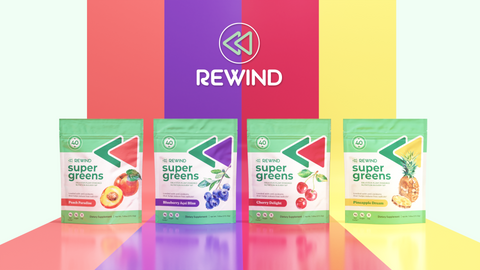
Cherry Delight
$39.99

Pineapple Dream
$39.99
Blueberry Acai Bliss
$39.99


