

For a long time, fat was treated as the enemy. Grocery stores filled up with low-fat cookies, fat-free salad dressings, and reduced-fat everything. But many of those products simply swapped fat for sugar, and people did not get healthier. Today, nutrition science tells a clearer story. The type of fat you eat matters much more than the total amount.
Some fats, like the ones in olive oil, nuts, avocados, and fish, are linked with better heart health and a longer life. Others, like the fats in fried foods, fatty processed meats, and many packaged snacks, are better kept to a minimum. This guide explains the different types of fat in plain words, what the research shows, and easy ways to make smart swaps. You will also learn why healthy fats and a daily super greens drink make a great team.
Fat is not just stored energy. Your body needs it to work properly. Fat helps build the outer layer of every cell in your body. It helps your body make certain hormones. It cushions and protects your organs. And it helps your body absorb vitamins A, D, E, and K, which only dissolve in fat. Without enough fat in a meal, your body cannot take in these vitamins very well.
Fat slows down how fast food leaves your stomach. That helps you feel satisfied longer after a meal. It also adds flavor and texture, which makes healthy foods like salads and vegetables more enjoyable to eat. A salad with a little olive oil dressing is often more filling and more nutritious than a fat-free one.
Unsaturated fats are the healthy fats. They are usually liquid at room temperature. There are two main kinds. The first kind is found in olive oil, avocados, almonds, peanuts, cashews, and canola oil. The second kind is found in walnuts, flaxseeds, sunflower seeds, soybean oil, and fatty fish like salmon and sardines. Fatty fish and walnuts also bring omega-3 fats, a special type of healthy fat that supports your heart and brain.
Saturated fats are usually solid at room temperature. They are found mostly in animal foods like butter, cheese, whole milk, fatty cuts of meat, bacon, and sausage, as well as in coconut oil and palm oil. Eating a lot of saturated fat can raise LDL cholesterol, often called bad cholesterol. Health experts suggest keeping saturated fat to less than 10 percent of your daily calories, which is about 20 grams a day for someone eating 2,000 calories.
Trans fats are the least healthy kind. Most come from partially hydrogenated oils, which were once used in many fried foods, baked goods, and stick margarines. They raise bad cholesterol and lower good cholesterol. The United States has largely banned added trans fats in foods, so they are much less common now. Still, check ingredient lists for partially hydrogenated oil, especially on older or imported products.
Research says yes. A large study followed more than 90,000 American adults for up to 28 years. People who ate more than half a tablespoon of olive oil a day had a 19 percent lower risk of dying during the study compared with people who rarely or never used olive oil. Swapping butter, margarine, mayonnaise, or dairy fat for olive oil was also linked to a lower risk. Interestingly, swapping olive oil for other vegetable oils did not show a clear difference, which suggests that replacing animal fats with plant oils is the main win.
The Mediterranean diet is an eating pattern common in countries like Greece, Italy, and Spain. It is rich in olive oil, vegetables, fruits, beans, whole grains, nuts, and fish, with less red meat and sweets. In a large trial in Spain, more than 7,400 adults at high risk for heart disease were assigned to one of three diets. Those who ate a Mediterranean diet with extra olive oil or extra nuts had fewer heart attacks, strokes, and heart-related deaths than those told to follow a lower-fat diet.
A large review of clinical trials found that reducing saturated fat for at least two years lowered the risk of heart attacks, strokes, and other heart and blood vessel events. What you replace saturated fat with matters. Swapping it for healthy plant oils, nuts, and seeds is a better choice than swapping it for sugar and white bread.
Cook with olive oil or canola oil instead of butter or lard. Use mashed avocado or hummus on sandwiches instead of mayonnaise or butter. Make salad dressing with olive oil and vinegar instead of creamy bottled dressings. Snack on a handful of nuts instead of chips. Choose fish, chicken, or beans more often than red and processed meats. Use olive oil to roast vegetables instead of drowning them in cheese sauce.
Aim to eat fatty fish like salmon, sardines, trout, mackerel, or herring about twice a week. Canned salmon and sardines are budget-friendly options. If you do not eat fish, add walnuts, ground flaxseed, chia seeds, and hemp seeds to your meals. These plant foods contain a type of omega-3 that your body can use, though it turns only a small amount into the forms found in fish. People who eat no fish may want to ask their doctor about an algae-based omega-3 supplement.
Coconut oil has become popular, but it is very high in saturated fat, even more than butter. It can raise bad cholesterol. It is fine to use now and then for flavor, but olive oil and canola oil are better choices for everyday cooking.
Extra virgin olive oil is great for salad dressings, drizzling on finished dishes, and everyday sautéing and roasting at medium heat. Regular or light olive oil, avocado oil, and canola oil work well for higher-heat cooking like stir-frying. Sesame oil adds rich flavor to Asian dishes, so a little goes a long way. Store oils in a cool, dark place, and buy olive oil in dark bottles to keep it fresh.
Even healthy fats are high in calories, about 120 calories per tablespoon of oil. Measure oil with a spoon instead of pouring it straight from the bottle. Use a spray bottle or brush for a thin coat on pans and vegetables. Small amounts add plenty of flavor and help your body absorb vitamins without adding too many extra calories.
Many of the vitamins and plant compounds in leafy greens and colorful vegetables dissolve in fat. That includes vitamin K, vitamin A from orange plant pigments, and Lutein, a yellow plant pigment that collects in your eyes. When you eat these foods with a little healthy fat, your body can absorb much more of them. That is why a spinach salad with olive oil dressing or roasted carrots tossed in oil gives you more than the same vegetables eaten plain.
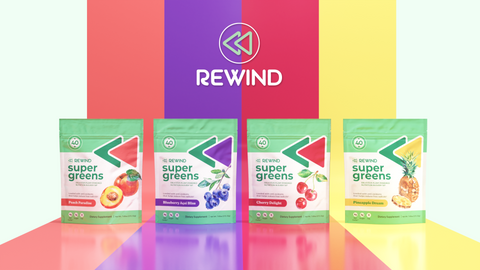
Rewind Greens includes Spinach Leaf Powder, Organic Broccoli Powder, Carrot Powder, Lutein, and other plant ingredients. To help your body take in more of them, drink your super greens with a breakfast that includes healthy fat, like avocado toast, eggs cooked in olive oil, or yogurt with nuts. Or blend your super greens into a smoothie with half an avocado, a spoonful of nut butter, or a tablespoon of chia seeds. It is a simple habit that helps you get more from every serving.
Large prospective cohort studies, a randomized primary prevention trial, and a Cochrane systematic review inform current guidance on dietary fat quality.
Fat is not the enemy. Your body needs it to build cells, make hormones, and absorb important vitamins. What matters most is the type of fat you choose. Unsaturated fats from olive oil, avocados, nuts, seeds, and fish are linked with better heart health and a longer life. Saturated fats from butter, fatty meats, and many processed foods are best kept to a smaller share of your diet, and trans fats should be avoided.
Make simple swaps: cook with olive oil, snack on nuts, choose fish twice a week, and use avocado instead of mayo. Pair healthy fats with leafy greens and colorful vegetables to absorb more of their vitamins. And enjoy your daily super greens drink alongside a breakfast with a little healthy fat. Small changes in the fats you choose can make a big difference over time.
Not necessarily. Research suggests that the type of fat matters more than the total amount. In a large trial, a Mediterranean diet rich in olive oil and nuts led to fewer heart problems than a lower-fat diet. Choose healthy fats instead of trying to cut out fat completely.
Studies have found benefits with as little as half a tablespoon a day. Many people use one to three tablespoons a day across their meals. Remember that oil is high in calories, so measure it and use it in place of less healthy fats, not on top of them.
Eggs and cheese can fit into a healthy diet in moderate amounts. Cheese is high in saturated fat and salt, so enjoy it in smaller portions. Eggs are a good source of protein. If you have high cholesterol or heart disease, ask your doctor how much is right for you.
Most people can get enough omega-3 fats by eating fatty fish about twice a week. If you do not eat fish, or if you have certain health conditions, talk to your doctor about whether a supplement makes sense. Fish oil can affect bleeding, so check with your doctor if you take blood thinners.
Some of the vitamins and plant pigments in leafy greens, like vitamin K, Lutein, and the orange pigments in carrots, dissolve in fat. Having a little healthy fat at the same time helps your body absorb more of them. Avocado toast, eggs, nuts, or a smoothie with nut butter all work well.
Cherry Delight
$39.99
Pineapple Dream
$39.99
Blueberry Acai Bliss
$39.99


